



ما هو تنظيف CIP وكيف يعمل؟ دليل المطلق لعام 2026
تخيل أن تغلق خط الإنتاج بأكمله، تفكك أنابيب الفولاذ المقاوم للصدأ الثقيلة، وترسل فريقا بفرش التنظيف إلى خزان محصور وخطير. قبل عقود، كان هذا هو السبيل الوحيد لضمان النظافة الصناعية. اليوم، هذا النهج ليس فقط عبئا هائلا على الربحية، بل يشكل أيضا عبئا كبيرا على السلامة. في تصنيع الأغذية والمشروبات الحديثة، والأدوية، والمواد الكيميائية، يعد وقت التوقف التشغيلي هو العدو، والتلوث المتبادل هو كارثة مدمرة للعلامة التجارية.
هذا يقودنا إلى سؤال أساسي لمديري المحطات ومهندسي العمليات: ما هو بالضبط CIP (التنظيف في المكان)، وكيف يضمن ظروفا صحية بنسبة 100٪ دون تفكيك معداتك؟
في هذا الدليل الشامل، سنحلل الآليات الأساسية لأنظمة CIP. ستتعلم المبادئ الأساسية التي تحكم التنظيف الفعال، وتحليل دورة الدورات خطوة بخطوة، وكيفية القضاء على "الأرجل الميتة" الخطيرة، وكيف يمكن لاختيار المعدات المناسبة أن يقلل بشكل كبير من استهلاكك للمياه والمواد الكيميائية. قبل الغوص في الجوانب التقنية، فإن فهم لماذا يعد تنظيف الخزان أمرا حاسما هو الخطوة الأساسية نحو تحسين كفاءة تشغيل مصنعك، وضمان سلامة المنتجات، والامتثال للوائح صارمة من إدارة الغذاء والدواء وGMP.
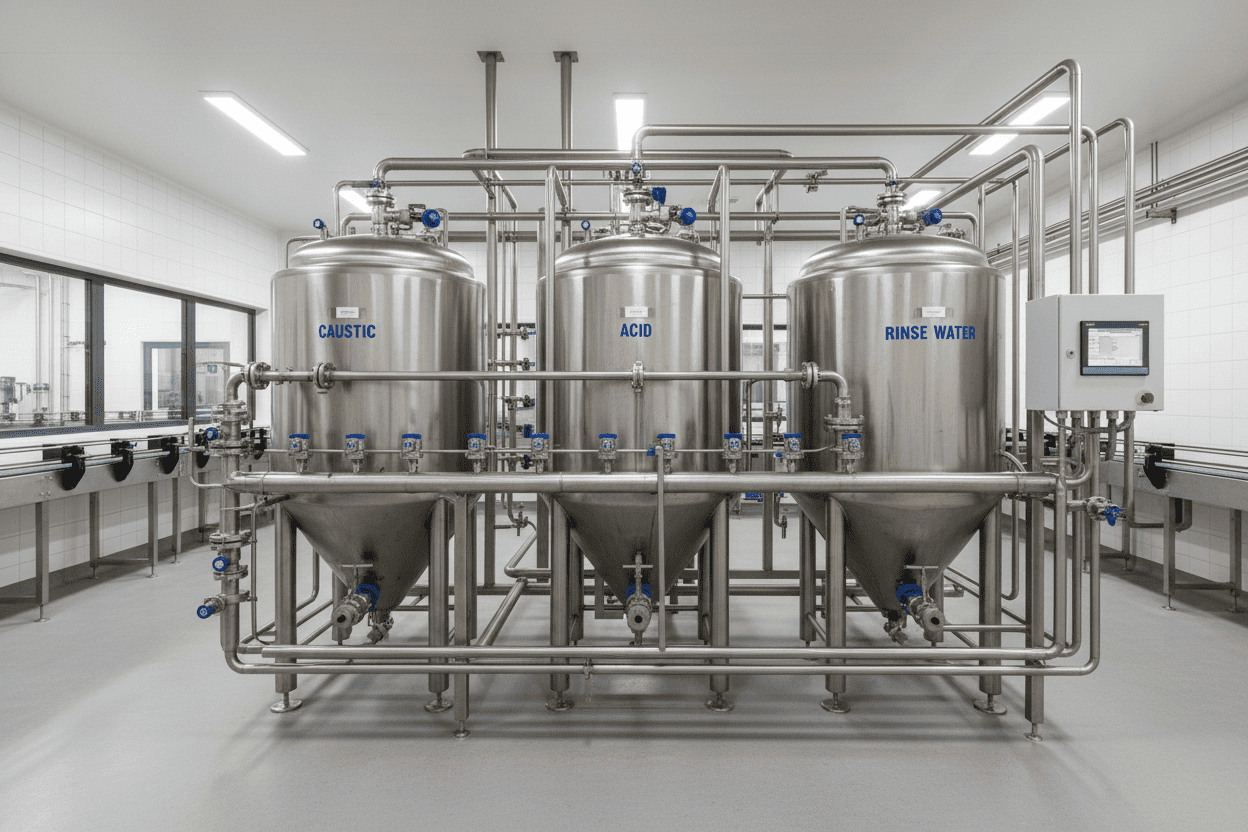
! نظام CIP الصناعي الآلي، خزانات الفولاذ المقاوم للصدأ وشبكة الأنابيب في مصنع مشروبات حديث
جدول المحتويات
- [1. فهم تنظيف CIP: الأساسيات] (#1-فهم-CIP-تنظيف-الأساسيات)
- 2. مفاهيم أساسية مبسطة
- [3. دليل خطوة بخطوة: دورة CIP القياسية (#3 خطوة بخطوة، دليل دورة CIP القياسية)
- [4. نصائح الخبراء والأخطاء الشائعة التي يجب تجنبها] (#4 نصائح الخبراء - الأخطاء الشائعة التي يجب تجنبها)
- [5. الخاتمة والأفكار النهائية](#5-خاتمة--أفكار أخيرة)
- 1. 1. فهم تنظيف CIP: الأساسيات
- 2. 2. المفاهيم الأساسية مبسطة
- 2.1. إزالة الغموض في مصطلحات الصناعة
- 2.2. الجدل الكبير: القديم مقابل الجديد
- 3. 3. دليل خطوة بخطوة: دورة CIP القياسية
- 3.1. المرحلة الأولى: الغسل المسبق
- 3.2. المرحلة الثانية: الغسل الكاوي
- 3.3. المرحلة الثالثة: شطف متوسط
- 3.4. المرحلة الرابعة: الغسيل الحمضي (اختياري لكنه موصى به)
- 3.5. المرحلة 5: الشطف النهائي
- 3.6. المرحلة 6: التعقيم / التعقيم
- 3.7. السيناريو أ: اختيار المعدات المناسبة لتقديم "الحركة"
- 4. 4. نصائح خبراء والمخاطر الشائعة التي يجب تجنبها
- 4.1. Pitfall 1: مناطق الظل "غير المرئية" (Dead Legs)
- 4.2. حفرة 2: كرات الري الساكن المسدودة
- 4.3. حفرة 3: تجاهل انخفاض ضغط المضخة
- 5. 5. الخاتمة والأفكار النهائية
- 6. 2. المفاهيم الأساسية مبسطة
- 6.1. إزالة الغموض في مصطلحات الصناعة
- 6.2. الجدل الكبير: القديم مقابل الجديد
- 7. 3. دليل خطوة بخطوة: دورة CIP القياسية
- 7.1. المرحلة الأولى: الغسل المسبق
- 7.2. المرحلة الثانية: الغسل الكاوي
- 7.3. المرحلة الثالثة: شطف متوسط
- 7.4. المرحلة الرابعة: الغسيل الحمضي (اختياري لكنه موصى به)
- 7.5. المرحلة 5: الشطف النهائي
- 7.6. المرحلة 6: التعقيم / التعقيم
- 7.7. السيناريو أ: اختيار المعدات المناسبة لتقديم "الحركة"
- 8. 4. نصائح خبراء والمخاطر الشائعة التي يجب تجنبها
- 8.1. Pitfall 1: مناطق الظل "غير المرئية" (Dead Legs)
- 8.2. حفرة 2: كرات الري الساكن المسدودة
- 8.3. حفرة 3: تجاهل انخفاض ضغط المضخة
- 9. 5. الخاتمة والأفكار النهائية
1. فهم تنظيف CIP: الأساسيات
التنظيف في المكان (CIP) هو منهجية هندسية آلية تستخدم لتنظيف الأسطح الداخلية للأنابيب والأوعية ومعدات العمليات والفلاتر والوصلات المرتبطة بها دون الحاجة إلى تفكيك النظام.
بالنسبة للمنشآت التي تعمل في المناطق الناطقة بالإنجليزية (الولايات المتحدة، المملكة المتحدة، كاليفورنيا، أستراليا) حيث تكون تكاليف العمالة مرتفعة والرقابة التنظيمية مكثفة، فإن CIP ليس مجرد وسيلة للراحة—بل هو أداة امتثال حيوية. تتطلب الهيئات التنظيمية مثل إدارة الغذاء والدواء (FDA) والإرشادات بموجب ممارسات التصنيع الجيدة (GMP) دليلا علميا مثبتا على أن بيئة المعالجة خالية من الملوثات الميكروبية وبقايا المواد الكيميائية بين دفعات الإنتاج.
لماذا يعتبر CIP هو المعيار الصناعي:
- تقليل كبير في وقت الفراغ: ما كان يتطلب وردية كاملة من العمل اليدوي أصبح الآن ينجز في 60 إلى 90 دقيقة.
- اتساق لا يقبل المساومة: الأنظمة الآلية تقضي على الأخطاء البشرية. كل دورة تعمل بنفس درجة الحرارة وتركيز المواد الكيميائية ونفس المدة بالضبط.
- الاستدامة وتوفير التكاليف: تم تصميم أنظمة CIP الحديثة لاستعادة وإعادة استخدام المياه والمواد الكيميائية، مما يقلل بشكل كبير من البصمة البيئية والإنفاق التشغيلي (OpEx).
- سلامة المشغل: الدخول في أماكن مغلقة هو من أخطر الأنشطة في مصنع صناعي. CIP يبقي موظفيك خارج الخزانات وبعيدا عن المواد الكيميائية القاسية ذات درجات الحرارة العالية.
2. المفاهيم الأساسية مبسطة
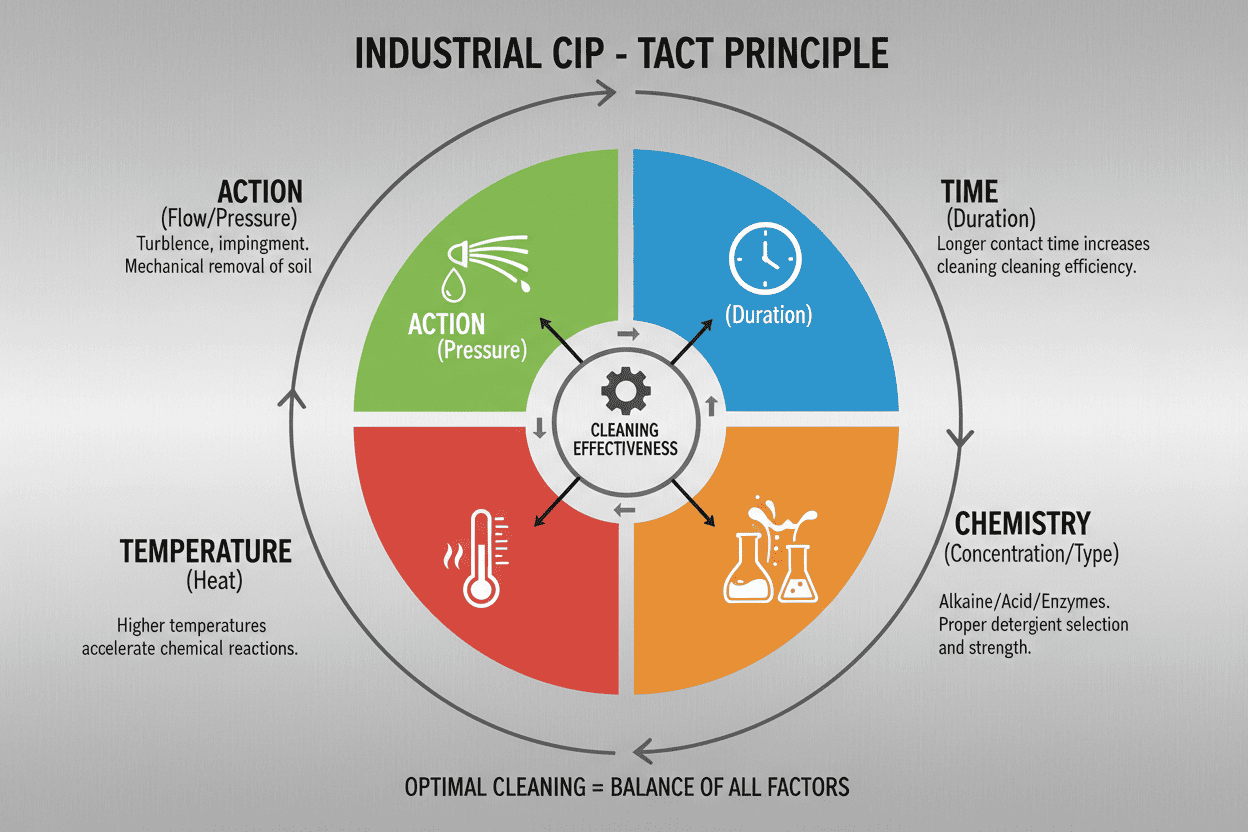
لفهم كيف تحقق أنظمة CIP النظافة المجهرية بشكل صحيح، نحتاج إلى إزالة المصطلحات الهندسية المعقدة. يعتمد نجاح أي نظام تنظيف آلي على توازن دقيق من أربعة عناصر، يعرف عالميا باسم مبدأ TACT.
فكر في مبدأ TACT تماما كغسل الصحون الدهنية في حوض مطبخك. إذا استخدمت ماء بارد بدلا من الساخن، ستحتاج إلى فرك الماء بقوة أكبر أو استخدام صابون أطباق أقوى لتنظيف الطبق. في CIP الصناعي، تنطبق نفس الفيزياء.
- T - الوقت: كم من الوقت يدور محلول التنظيف على الأسطح المتسخة. الفترات الأطول يمكن أن تعوض عن المواد الكيميائية الأضعف.
- A - الأكشن: القوة الميكانيكية والمادية المستخدمة لإزالة البقايا اللزجة. في الخزان، يتم تنفيذ هذا الفعل "الفركي" بواسطة فوهات رش عالية الضغط.
- ج - الكيمياء: المحاليل القلوية (الكاوية) أو الحمضية المحددة المستخدمة لإذابة البروتينات والدهون والقشور المعدنية.
- T - درجة الحرارة: مستوى حرارة السوائل. درجات الحرارة الأعلى تزيد بشكل كبير من فعالية المواد الكيميائية وتساعد في إذابة الدهون اللزجة.
! مخطط يشرح مبدأ TACT لدرجة حرارة الكيمياء الزمنية للفعل الكهربائي لتنظيف CIP الصناعي
إزالة الغموض في مصطلحات الصناعة
قبل ترقية النظام، يجب على مديري المحطات فهم المصطلحات المحددة التي يستخدمها مهندسو العمليات:
- الأرجل الميتة / مناطق الظل: هذه هي الجيوب التي يصعب الوصول إليها داخل الأنابيب أو الخزانات—مثل خلف شفرات التحريك أو داخل الصمامات المعقدة. إذا لم تستطع نفاث الماء في فوهة الرش إصابة هذه النقاط فعليا، فإن البكتيريا ستبقى وتنمو وتلوث الدفعة التالية.
- الاصطدام: هذه هي "الضربة" الفيزيائية أو قوة الاصطدام النفاثة المائية التي تصطدم بجدار الفولاذ المقاوم للصدأ. يتطلب الأمر انفجارا عاليا لإزالة البقايا الصلبة أو المخبوزة أو اللزجة فعليا (مثل الخميرة في مصانع الجعة أو الشراب الكثيف في معالجة الأغذية).
- التحقق من CIP: في القطاعات المنظمة بشدة مثل الأدوية، لا يمكنك ببساطة القول إن الخزان نظيف. يجب أن تثبت ذلك. التحقق هو عملية اختبار دقيقة وموثقة (باستخدام اختبارات المسحة وتحليل مياه الشطف) لضمان علميا عدم بقاء أي مكونات أو بكتيريا فعالة من الأدوية (APIs).
الجدل الكبير: القديم مقابل الجديد
عندما يقوم مديرو المنشآت بتحليل عنق الزجاجة التشغيلية لديهم، غالبا ما يقارنون إيجابيات وسلبيات إعدادهم الحالي. تكشف التعمق في التنظيف اليدوي مقابل الآلي عن سبب تخلي الصناعات المنظمة بشدة عن التنظيف اليدوي تماما.
جدول المقارنة: أنظمة CIP اليدوية مقابل الآلية (CIP)
| الميزة/المقياس | تنظيف الخزان يدويا | نظام CIP الآلي |
|---|---|---|
| اتساق التنظيف | متغير للغاية (يعتمد على إجهاد المشغل) | قابلة للتكرار ودقيقة 100٪ |
| وقت التوقف / وقت العمل | عالي (يتطلب تفكيك ودخول محصور) | منخفض (تشغيل زر ضغط، استجابة سريعة) |
| المياه والنفايات الكيميائية | عالي جدا (رش يدوي مستمر) | منخفض (الأنظمة تستعيد السوائل وتعيد تدويرها) |
| مخاطر السلامة | حرج (المساحة الضيقة، التعرض الكيميائي) | الحد الأدنى (التشغيل المغلق بالكامل) |
| التحقق التنظيمي | من شبه المستحيل التحقق علميا | موثق بشكل كبير، متوافق مع GMP/FDA |
3. دليل خطوة بخطوة: دورة CIP القياسية
لجعل العملية الصناعية المعقدة قابلة للتواصل، تخيل غسالة منزلك. لا يملأ الماء بالصابون مرة واحدة فقط؛ يمر بسلسلة محسوبة من الحشوات والتحريك والشطف لضمان نظافة الملابس وخاليها من المنظفات. تعمل دورة CIP الصناعية القياسية على نفس المنطق بالضبط، وعادة ما تتضمن 5 إلى 7 خطوات مميزة.
المرحلة الأولى: الغسل المسبق
تبدأ الدورة بغسل النظام بالماء (غالبا ما يعاد تدويره من الغسل النهائي للدورة السابقة لتوفير التكاليف).
- الغرض: لإزالة التربة السائلة والسائلة، والسكريات غير المذابة، والجزيئات الكبيرة بشكل ميكانيكي. إذا تم استخدام ماء دافئ، فهو يساعد في إذابة الدهون.
- تفصيل حاسم: تخطي هذه الخطوة يعني أن المواد الكيميائية المكلفة في المرحلة التالية ستهدر في مكافحة الأوساخ الفضفاضة بدلا من تفكيك البقايا الملتصقة.
المرحلة الثانية: الغسل الكاوي
هذه هي مرحلة الرفع الثقيل. يتم تدوير محلول قلوي عالي (عادة هيدروكسيد الصوديوم / الصوديوم الكاوي، بتركيز يتراوح بين 1٪ إلى 2٪) عند درجات حرارة عالية (غالبا بين 60°C إلى 85°C).
- الغرض: الكيمياء الكاوية تقوم بتصلب الدهون (تحولها إلى صابون) وتفكك البنى البروتينية المعقدة، مما يسمح بغسلها.
المرحلة الثالثة: شطف متوسط
يتم ضخ المياه العذبة أو المسترجعة عبر النظام لطرد المواد الكيميائية الكاوية والتربة المعلقة.
- الغرض: تجهيز الحوض للغسل الحمضي. خلط المادة الكاوية مع الحمض مباشرة سيحيد كلاهما ويخلق تفاعلا كيميائيا خطيرا.
المرحلة الرابعة: الغسيل الحمضي (اختياري لكنه موصى به)
اعتمادا على الصناعة، يتم تدوير محلول حمضي (مثل حمض النيتريك أو الفوسفوريك) عند درجات حرارة أقل.
- الغرض: بينما يزيل الكاوي المادة العضوية، يزيل الحمض المادة غير العضوية. يذيب القشرة المعدنية (مثل ترسبات الكالسيوم أو "حجر البيرة" في مصانع الجعة) ويعادل أي آثار متبقية من الغسيل القلوي.
المرحلة 5: الشطف النهائي
يتم غسل النظام بمياه منقاء للغاية — غالبا ما تكون مياه منزوع الأيونات (DI) أو مياه التناضح العكسي (RO) في البيئات الصيدلانية.
- الغرض: يضمن طرد جميع البقايا الكيميائية من النظام. غالبا ما يتم اختبار ماء الشطف من حيث التوصيلية؛ إذا كانت الموصلية مطابقة للماء النقي، يكون الخزان نظيفا كيميائيا.
المرحلة 6: التعقيم / التعقيم
قبل بدء دفعة الإنتاج التالية، يجب تعقيم النظام لقتل أي كائنات دقيقة متبقية.
- الغرض: يتم تحقيق ذلك إما من خلال المععقات الكيميائية (مثل حمض البيراسيتيك) أو عن طريق تدوير البخار الحي (وهي عملية تعرف باسم SIP - التعقيم في المكان).
السيناريو أ: اختيار المعدات المناسبة لتقديم "الحركة"
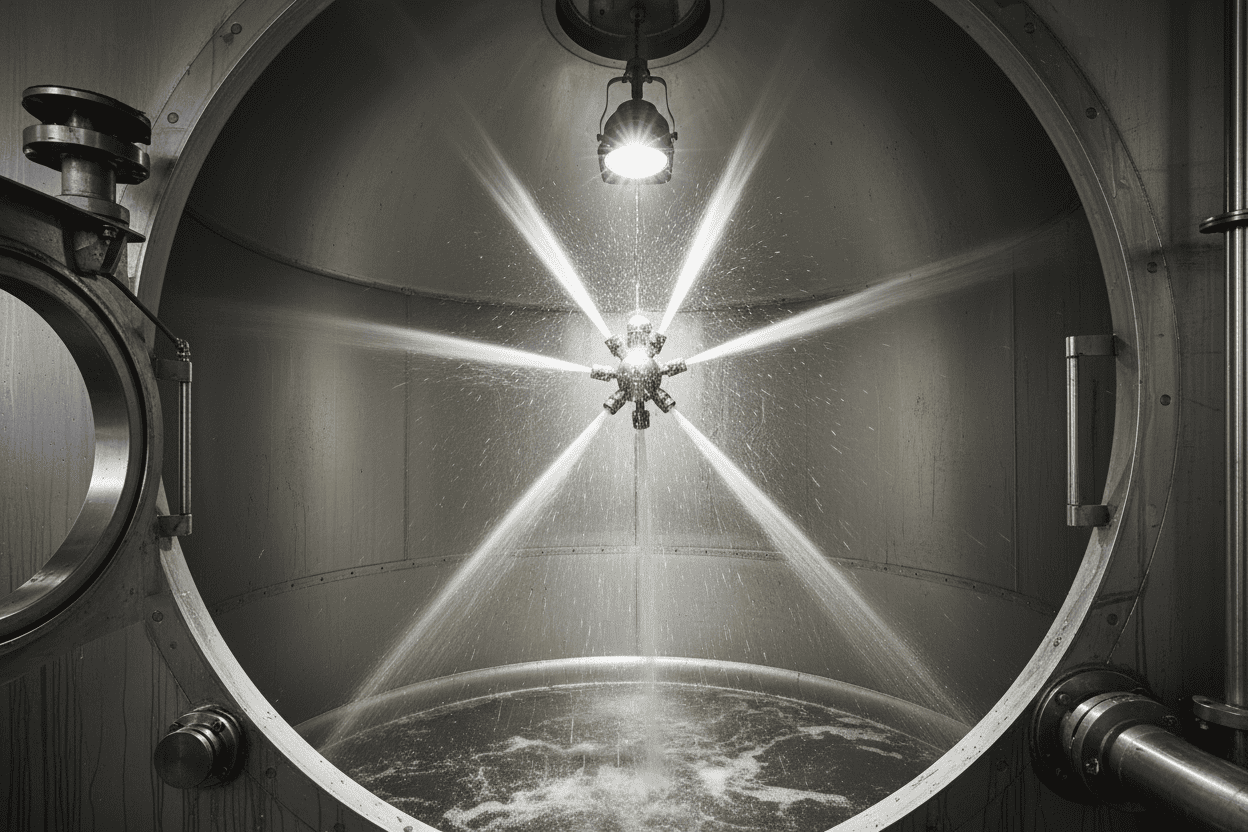
يمكنك الحصول على درجة حرارة مثالية، وأقوى المواد الكيميائية، وكل الوقت في العالم، لكن إذا تعطلت معدات التنظيف الفيزيائية داخل الخزان، فإن دورة CIP ستعطل. المكون الأكثر أهمية داخل وعاء المعالجة هو الفوهة. يعمل ك"رأس الدش"، حيث يحول ضغط السائل من مضخات CIP إلى "الفعل" الميكانيكي لمبدأ TACT.
فهم كيفية عمل فوهات تنظيف الخزانات أمر أساسي لأي مهندس عمليات. إذا استخدمت فوهة ضعيفة في حوض كبير، سيتسرب الماء ببساطة على الجدران، تاركا بقايا لزجة دون أن تمس.
بالنسبة للتطبيقات الصناعية الثقيلة التي تتعامل مع البقايا اللزجة أو اللزجة أو المخبوزة، لم تعد كرات الرش الساكنة كافية. اختيار فوهات تنظيف الخزانات عالية التأثير للتطبيقات الصناعية (https://www.nozzle-intellect.com/application/tank-cleaning-nozzles-for-industrial-applications/2.html) هو الطريقة الأكثر فعالية للقضاء على الأرجل الميتة، وضمان التحقق من CIP، وتقليل وقت التسليم بشكل كبير.
! فوهة تنظيف خزان نفاث دوار ترش مياه عالية الضغط داخل وعاء صناعي مقاوم للصدأ
جدول المواصفات: اختيار فوهة تنظيف الخزان المناسبة
| نوع الفوهة | آلية العمل | الاصطدام (قوة الاصطدام) | الأفضل ل | كفاءة المياه/الكيمياء |
|---|---|---|---|---|
| كرات البخاخ الثابتة | تدفق السائل على جدران الخزان | منخفض جدا | تربة خفيفة، سوائل سهلة الذوبان (مثل الحليب، العائل) | فقير (يتطلب كمية كبيرة من الماء) |
| رؤوس الرش الدوارة | مروحة السائل الدوارة | متوسط | التربة المتوسطة، التخمير الحرفي، معالجة الأغذية القياسية | جيد (تغطية أفضل من التشويش) |
| رؤوس نفاثات دوارة | نفاثات صلبة عالية الضغط دوارة بزاوية 360° | مرتفع جدا | بقايا ثقيلة، لزجة، لزجة، أو مخبوزة (مثل الراتنج، زبدة الفول السوداني، APIs) | ممتاز (يستخدم القوة الميكانيكية على حجم الماء) |
4. نصائح خبراء والمخاطر الشائعة التي يجب تجنبها
إذا قضيت وقتا في منتديات صناعية مثل 'r/ChemicalEngineering' أو 'r/TheBrewery' على ريديت، ستدرك بسرعة أن عمليات CIP الحقيقية نادرا ما تسير بشكل مثالي من المحاولة الأولى. النظرية شيء؛ الممارسة أخرى. إليك أكثر العقبات شيوعا التي يواجهها مديرو النباتات وكيفية تجنبها.
Pitfall 1: مناطق الظل "غير المرئية" (Dead Legs)
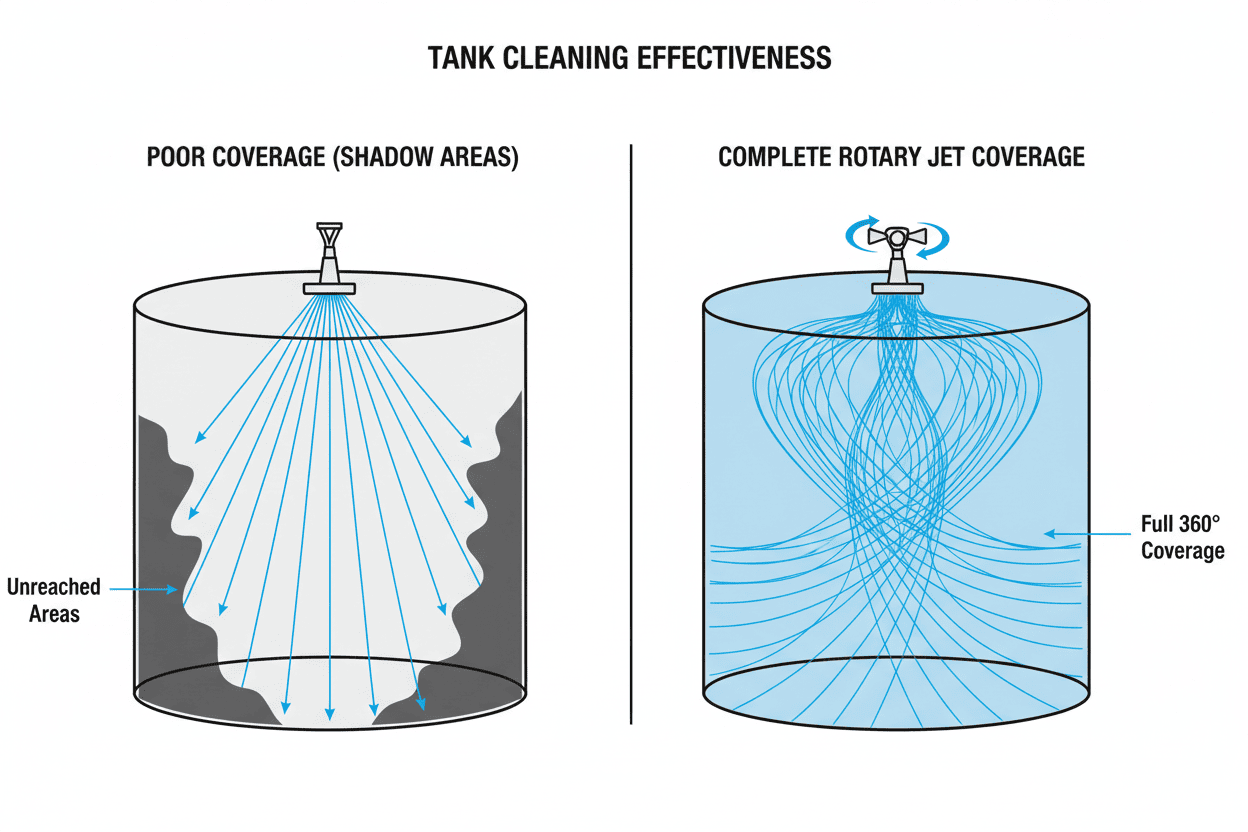
المشكلة: مهندس ضمان الجودة يفشل في اختبار مسحة التحقق من صحة CIP لأن البكتيريا وجدت خلف مجداف التحريك في الخزان. كرة الرش العادية ببساطة لا يمكنها الرش خلف العائق المادي. الإصلاح: لا تعتمد أبدا على كرة رش واحدة لخزان معقد. استخدم عدة فوهات موضوعة بشكل استراتيجي لإنشاء أنماط رش متداخلة، أو قم بالترقية إلى رأس نفاث دوار ثلاثي الأبعاد يرسم حجم الداخل بالكامل على مدى دورة محددة.
حفرة 2: كرات الري الساكن المسدودة
المشكلة: يلاحظ المشغلون أن الخزان لا ينظف. عند الفحص، يجدون أن الثقوب الصغيرة في كرة الرش الساكنة مسدودة بمادة القفزات أو لب الفاكهة أو الحطام الناتج عن العملية. الإصلاح: تركيب مصفاة متداخلة قبل مضخة CIP لالتقاط الحطام. الأفضل من ذلك، استبدل كرات الرش الثابتة برؤوس دوارة ذاتية التنظيف لا تحتوي على ثقوب دقيقة عرضة للانسداد.
حفرة 3: تجاهل انخفاض ضغط المضخة
المشكلة: تم تصميم نظام CIP لتوصيل ضغط 5 بار إلى الفوهة، لكن التأثير الفعلي داخل الخزان ضعيف. الإصلاح: غالبا ما ينسى مهندسو العمليات حساب فقدان الاحتكاك في الأنابيب بين المضخة والخزان. دائما قم بتركيب عدادات ضغط عند مدخل الفوهة، وليس فقط عند تفريغ المضخة، لضمان تحقيق معامل "الفعل" الفعلي.
! مخطط مقارنة يظهر تغطية تنظيف خزانات ضعيفة في مناطق الظل مقابل تغطية كاملة للطائرات النفاثة الدوارة
5. الخاتمة والأفكار النهائية
إتقان عملية تنظيف CIP هو أحد أعلى الاستثمارات التي يمكن أن تقوم بها منشأة التصنيع. إنه العمود الفقري غير المرئي للنظافة الصناعية الحديثة، حيث يحمي سمعة علامتك التجارية وأرباحك.
من خلال فهم عميق لمبدأ TACT، واحترام التسلسل الدقيق لدورة CIP، والانتقال من الطرق اليدوية القديمة إلى الحلول المؤتمتة بالكامل، فإنك تقضي على التخمين في التنظيف النباتي. والأهم من ذلك، أن إدراك أن القوة الميكانيكية لفوهات تنظيف الخزان تحدد نجاح بنية CIP التحتية التي تبلغ قيمتها بملايين الدولارات سيوفر عليك ساعات لا تحصى من استكشاف الأخطاء وفشل التحقق من المعلومات.
ملخص سريع: قائمة تحقق تحسين CIP
| منطقة التركيز | النقاط الرئيسية | خطوة العمل الفورية |
|---|---|---|
| الميكانيكايون | يعتمد CIP على اللباقة: الوقت، العمل، الكيمياء، درجة الحرارة. | تدقيق دورتك الحالية: هل تعتمد بشكل مفرط على المواد الكيميائية لأن "الفعل" الميكانيكي لديك ضعيف؟ |
| المعدات | التنظيف اليدوي أصبح قديما؛ الأتمتة تضمن الامتثال. | راجع تكاليف العمالة وفترات التوقف المرتبطة بالتنظيف اليدوي لتبرير ترقية CIP تلقائية. |
| الفوهات | كرات الرش الساكنة تصرف مياه الصرف؛ الطائرات الدوارة توفر الموارد. | افحص خزاناتك بحثا عن "مناطق الظل" وقم بالترقية إلى فوهات دوارة عالية التأثير عند الحاجة. |
| التحقق | يجب أن تثبت النظافة للامتثال لإدارة الغذاء والدواء وإدارة الغذاء والدواء والممارسات الجيدة (GMP). | تأكد من أن توصيل مياه الشطف النهائي يتطابق مع قواعد الماء النقي قبل إطلاق الخزان للإنتاج. |
هل أنت مستعد للتخلص من الأرجل الميتة، وتقليل استهلاك الماء، وتحسين دورات التنظيف؟ قيم إعداد الفوهة الحالي لديك اليوم وتأكد من أن منشأتك تعمل بأقصى كفاءة.## 1. فهم تنظيف CIP: الأساسيات
التنظيف في المكان (CIP) هو منهجية هندسية آلية تستخدم لتنظيف الأسطح الداخلية للأنابيب والأوعية ومعدات العمليات والفلاتر والوصلات المرتبطة بها دون الحاجة إلى تفكيك النظام.
بالنسبة للمنشآت التي تعمل في المناطق الناطقة بالإنجليزية (الولايات المتحدة، المملكة المتحدة، كاليفورنيا، أستراليا) حيث تكون تكاليف العمالة مرتفعة والرقابة التنظيمية مكثفة، فإن CIP ليس مجرد وسيلة للراحة—بل هو أداة امتثال حيوية. تتطلب الهيئات التنظيمية مثل إدارة الغذاء والدواء (FDA) والإرشادات بموجب ممارسات التصنيع الجيدة (GMP) دليلا علميا مثبتا على أن بيئة المعالجة خالية من الملوثات الميكروبية وبقايا المواد الكيميائية بين دفعات الإنتاج.
لماذا يعتبر CIP هو المعيار الصناعي:
- تقليل كبير في وقت الفراغ: ما كان يتطلب وردية كاملة من العمل اليدوي أصبح الآن ينجز في 60 إلى 90 دقيقة.
- اتساق لا يقبل المساومة: الأنظمة الآلية تقضي على الأخطاء البشرية. كل دورة تعمل بنفس درجة الحرارة وتركيز المواد الكيميائية ونفس المدة بالضبط.
- الاستدامة وتوفير التكاليف: تم تصميم أنظمة CIP الحديثة لاستعادة وإعادة استخدام المياه والمواد الكيميائية، مما يقلل بشكل كبير من البصمة البيئية والإنفاق التشغيلي (OpEx).
- سلامة المشغل: الدخول في أماكن مغلقة هو من أخطر الأنشطة في مصنع صناعي. CIP يبقي موظفيك خارج الخزانات وبعيدا عن المواد الكيميائية القاسية ذات درجات الحرارة العالية.
2. المفاهيم الأساسية مبسطة
لفهم كيف تحقق أنظمة CIP النظافة المجهرية بشكل صحيح، نحتاج إلى إزالة المصطلحات الهندسية المعقدة. يعتمد نجاح أي نظام تنظيف آلي على توازن دقيق من أربعة عناصر، يعرف عالميا باسم مبدأ TACT.
فكر في مبدأ TACT تماما كغسل الصحون الدهنية في حوض مطبخك. إذا استخدمت ماء بارد بدلا من الساخن، ستحتاج إلى فرك الماء بقوة أكبر أو استخدام صابون أطباق أقوى لتنظيف الطبق. في CIP الصناعي، تنطبق نفس الفيزياء.
- T - الوقت: كم من الوقت يدور محلول التنظيف على الأسطح المتسخة. الفترات الأطول يمكن أن تعوض عن المواد الكيميائية الأضعف.
- A - الأكشن: القوة الميكانيكية والمادية المستخدمة لإزالة البقايا اللزجة. في الخزان، يتم تنفيذ هذا الفعل "الفركي" بواسطة فوهات رش عالية الضغط.
- ج - الكيمياء: المحاليل القلوية (الكاوية) أو الحمضية المحددة المستخدمة لإذابة البروتينات والدهون والقشور المعدنية.
- T - درجة الحرارة: مستوى حرارة السوائل. درجات الحرارة الأعلى تزيد بشكل كبير من فعالية المواد الكيميائية وتساعد في إذابة الدهون اللزجة.
! مخطط يشرح مبدأ TACT لدرجة حرارة الكيمياء الزمنية للفعل الكهربائي لتنظيف CIP الصناعي
إزالة الغموض في مصطلحات الصناعة
قبل ترقية النظام، يجب على مديري المحطات فهم المصطلحات المحددة التي يستخدمها مهندسو العمليات:
- الأرجل الميتة / مناطق الظل: هذه هي الجيوب التي يصعب الوصول إليها داخل الأنابيب أو الخزانات—مثل خلف شفرات التحريك أو داخل الصمامات المعقدة. إذا لم تستطع نفاث الماء في فوهة الرش إصابة هذه النقاط فعليا، فإن البكتيريا ستبقى وتنمو وتلوث الدفعة التالية.
- الاصطدام: هذه هي "الضربة" الفيزيائية أو قوة الاصطدام النفاثة المائية التي تصطدم بجدار الفولاذ المقاوم للصدأ. يتطلب الأمر انفجارا عاليا لإزالة البقايا الصلبة أو المخبوزة أو اللزجة فعليا (مثل الخميرة في مصانع الجعة أو الشراب الكثيف في معالجة الأغذية).
- التحقق من CIP: في القطاعات المنظمة بشدة مثل الأدوية، لا يمكنك ببساطة القول إن الخزان نظيف. يجب أن تثبت ذلك. التحقق هو عملية اختبار دقيقة وموثقة (باستخدام اختبارات المسحة وتحليل مياه الشطف) لضمان علميا عدم بقاء أي مكونات أو بكتيريا فعالة من الأدوية (APIs).
الجدل الكبير: القديم مقابل الجديد
عندما يقوم مديرو المنشآت بتحليل عنق الزجاجة التشغيلية لديهم، غالبا ما يقارنون إيجابيات وسلبيات إعدادهم الحالي. تكشف التعمق في التنظيف اليدوي مقابل الآلي عن سبب تخلي الصناعات المنظمة بشدة عن التنظيف اليدوي تماما.
جدول المقارنة: أنظمة CIP اليدوية مقابل الآلية (CIP)
| الميزة/المقياس | تنظيف الخزان يدويا | نظام CIP الآلي |
|---|---|---|
| اتساق التنظيف | متغير للغاية (يعتمد على إجهاد المشغل) | قابلة للتكرار ودقيقة 100٪ |
| وقت التوقف / وقت العمل | عالي (يتطلب تفكيك ودخول محصور) | منخفض (تشغيل زر ضغط، استجابة سريعة) |
| المياه والنفايات الكيميائية | عالي جدا (رش يدوي مستمر) | منخفض (الأنظمة تستعيد السوائل وتعيد تدويرها) |
| مخاطر السلامة | حرج (المساحة الضيقة، التعرض الكيميائي) | الحد الأدنى (التشغيل المغلق بالكامل) |
| التحقق التنظيمي | من شبه المستحيل التحقق علميا | موثق بشكل كبير، متوافق مع GMP/FDA |
3. دليل خطوة بخطوة: دورة CIP القياسية
لجعل العملية الصناعية المعقدة قابلة للتواصل، تخيل غسالة منزلك. لا يملأ الماء بالصابون مرة واحدة فقط؛ يمر بسلسلة محسوبة من الحشوات والتحريك والشطف لضمان نظافة الملابس وخاليها من المنظفات. تعمل دورة CIP الصناعية القياسية على نفس المنطق بالضبط، وعادة ما تتضمن 5 إلى 7 خطوات مميزة.
المرحلة الأولى: الغسل المسبق
تبدأ الدورة بغسل النظام بالماء (غالبا ما يعاد تدويره من الغسل النهائي للدورة السابقة لتوفير التكاليف).
- الغرض: لإزالة التربة السائلة والسائلة، والسكريات غير المذابة، والجزيئات الكبيرة بشكل ميكانيكي. إذا تم استخدام ماء دافئ، فهو يساعد في إذابة الدهون.
- تفصيل حاسم: تخطي هذه الخطوة يعني أن المواد الكيميائية المكلفة في المرحلة التالية ستهدر في مكافحة الأوساخ الفضفاضة بدلا من تفكيك البقايا الملتصقة.
المرحلة الثانية: الغسل الكاوي
هذه هي مرحلة الرفع الثقيل. يتم تدوير محلول قلوي عالي (عادة هيدروكسيد الصوديوم / الصوديوم الكاوي، بتركيز يتراوح بين 1٪ إلى 2٪) عند درجات حرارة عالية (غالبا بين 60°C إلى 85°C).
- الغرض: الكيمياء الكاوية تقوم بتصلب الدهون (تحولها إلى صابون) وتفكك البنى البروتينية المعقدة، مما يسمح بغسلها.
المرحلة الثالثة: شطف متوسط
يتم ضخ المياه العذبة أو المسترجعة عبر النظام لطرد المواد الكيميائية الكاوية والتربة المعلقة.
- الغرض: تجهيز الحوض للغسل الحمضي. خلط المادة الكاوية مع الحمض مباشرة سيحيد كلاهما ويخلق تفاعلا كيميائيا خطيرا.
المرحلة الرابعة: الغسيل الحمضي (اختياري لكنه موصى به)
اعتمادا على الصناعة، يتم تدوير محلول حمضي (مثل حمض النيتريك أو الفوسفوريك) عند درجات حرارة أقل.
- الغرض: بينما يزيل الكاوي المادة العضوية، يزيل الحمض المادة غير العضوية. يذيب القشرة المعدنية (مثل ترسبات الكالسيوم أو "حجر البيرة" في مصانع الجعة) ويعادل أي آثار متبقية من الغسيل القلوي.
المرحلة 5: الشطف النهائي
يتم غسل النظام بمياه منقاء للغاية — غالبا ما تكون مياه منزوع الأيونات (DI) أو مياه التناضح العكسي (RO) في البيئات الصيدلانية.
- الغرض: يضمن طرد جميع البقايا الكيميائية من النظام. غالبا ما يتم اختبار ماء الشطف من حيث التوصيلية؛ إذا كانت الموصلية مطابقة للماء النقي، يكون الخزان نظيفا كيميائيا.
المرحلة 6: التعقيم / التعقيم
قبل بدء دفعة الإنتاج التالية، يجب تعقيم النظام لقتل أي كائنات دقيقة متبقية.
- الغرض: يتم تحقيق ذلك إما من خلال المععقات الكيميائية (مثل حمض البيراسيتيك) أو عن طريق تدوير البخار الحي (وهي عملية تعرف باسم SIP - التعقيم في المكان).
السيناريو أ: اختيار المعدات المناسبة لتقديم "الحركة"
يمكنك الحصول على درجة حرارة مثالية، وأقوى المواد الكيميائية، وكل الوقت في العالم، لكن إذا تعطلت معدات التنظيف الفيزيائية داخل الخزان، فإن دورة CIP ستعطل. المكون الأكثر أهمية داخل وعاء المعالجة هو الفوهة. يعمل ك"رأس الدش"، حيث يحول ضغط السائل من مضخات CIP إلى "الفعل" الميكانيكي لمبدأ TACT.
فهم كيفية عمل فوهات تنظيف الخزانات أمر أساسي لأي مهندس عمليات. إذا استخدمت فوهة ضعيفة في حوض كبير، سيتسرب الماء ببساطة على الجدران، تاركا بقايا لزجة دون أن تمس.
بالنسبة للتطبيقات الصناعية الثقيلة التي تتعامل مع البقايا اللزجة أو اللزجة أو المخبوزة، لم تعد كرات الرش الساكنة كافية. اختيار فوهات تنظيف الخزانات عالية التأثير للتطبيقات الصناعية (https://www.nozzle-intellect.com/application/tank-cleaning-nozzles-for-industrial-applications/2.html) هو الطريقة الأكثر فعالية للقضاء على الأرجل الميتة، وضمان التحقق من CIP، وتقليل وقت التسليم بشكل كبير.
! فوهة تنظيف خزان نفاث دوار ترش مياه عالية الضغط داخل وعاء صناعي مقاوم للصدأ
جدول المواصفات: اختيار فوهة تنظيف الخزان المناسبة
| نوع الفوهة | آلية العمل | الاصطدام (قوة الاصطدام) | الأفضل ل | كفاءة المياه/الكيمياء |
|---|---|---|---|---|
| كرات البخاخ الثابتة | تدفق السائل على جدران الخزان | منخفض جدا | تربة خفيفة، سوائل سهلة الذوبان (مثل الحليب، العائل) | فقير (يتطلب كمية كبيرة من الماء) |
| رؤوس الرش الدوارة | مروحة السائل الدوارة | متوسط | التربة المتوسطة، التخمير الحرفي، معالجة الأغذية القياسية | جيد (تغطية أفضل من التشويش) |
| رؤوس نفاثات دوارة | نفاثات صلبة عالية الضغط دوارة بزاوية 360° | مرتفع جدا | بقايا ثقيلة، لزجة، لزجة، أو مخبوزة (مثل الراتنج، زبدة الفول السوداني، APIs) | ممتاز (يستخدم القوة الميكانيكية على حجم الماء) |
4. نصائح خبراء والمخاطر الشائعة التي يجب تجنبها
إذا قضيت وقتا في منتديات صناعية مثل 'r/ChemicalEngineering' أو 'r/TheBrewery' على ريديت، ستدرك بسرعة أن عمليات CIP الحقيقية نادرا ما تسير بشكل مثالي من المحاولة الأولى. النظرية شيء؛ الممارسة أخرى. إليك أكثر العقبات شيوعا التي يواجهها مديرو النباتات وكيفية تجنبها.
Pitfall 1: مناطق الظل "غير المرئية" (Dead Legs)
المشكلة: مهندس ضمان الجودة يفشل في اختبار مسحة التحقق من صحة CIP لأن البكتيريا وجدت خلف مجداف التحريك في الخزان. كرة الرش العادية ببساطة لا يمكنها الرش خلف العائق المادي. الإصلاح: لا تعتمد أبدا على كرة رش واحدة لخزان معقد. استخدم عدة فوهات موضوعة بشكل استراتيجي لإنشاء أنماط رش متداخلة، أو قم بالترقية إلى رأس نفاث دوار ثلاثي الأبعاد يرسم حجم الداخل بالكامل على مدى دورة محددة.
حفرة 2: كرات الري الساكن المسدودة
المشكلة: يلاحظ المشغلون أن الخزان لا ينظف. عند الفحص، يجدون أن الثقوب الصغيرة في كرة الرش الساكنة مسدودة بمادة القفزات أو لب الفاكهة أو الحطام الناتج عن العملية. الإصلاح: تركيب مصفاة متداخلة قبل مضخة CIP لالتقاط الحطام. الأفضل من ذلك، استبدل كرات الرش الثابتة برؤوس دوارة ذاتية التنظيف لا تحتوي على ثقوب دقيقة عرضة للانسداد.
حفرة 3: تجاهل انخفاض ضغط المضخة
المشكلة: تم تصميم نظام CIP لتوصيل ضغط 5 بار إلى الفوهة، لكن التأثير الفعلي داخل الخزان ضعيف. الإصلاح: غالبا ما ينسى مهندسو العمليات حساب فقدان الاحتكاك في الأنابيب بين المضخة والخزان. دائما قم بتركيب عدادات ضغط عند مدخل الفوهة، وليس فقط عند تفريغ المضخة، لضمان تحقيق معامل "الفعل" الفعلي.
! مخطط مقارنة يظهر تغطية تنظيف خزانات ضعيفة في مناطق الظل مقابل تغطية كاملة للطائرات النفاثة الدوارة
5. الخاتمة والأفكار النهائية
إتقان عملية تنظيف CIP هو أحد أعلى الاستثمارات التي يمكن أن تقوم بها منشأة التصنيع. إنه العمود الفقري غير المرئي للنظافة الصناعية الحديثة، حيث يحمي سمعة علامتك التجارية وأرباحك.
من خلال فهم عميق لمبدأ TACT، واحترام التسلسل الدقيق لدورة CIP، والانتقال من الطرق اليدوية القديمة إلى الحلول المؤتمتة بالكامل، فإنك تقضي على التخمين في التنظيف النباتي. والأهم من ذلك، أن إدراك أن القوة الميكانيكية لفوهات تنظيف الخزان تحدد نجاح بنية CIP التحتية التي تبلغ قيمتها بملايين الدولارات سيوفر عليك ساعات لا تحصى من استكشاف الأخطاء وفشل التحقق من المعلومات.
ملخص سريع: قائمة تحقق تحسين CIP
| منطقة التركيز | النقاط الرئيسية | خطوة العمل الفورية |
|---|---|---|
| الميكانيكايون | يعتمد CIP على اللباقة: الوقت، العمل، الكيمياء، درجة الحرارة. | تدقيق دورتك الحالية: هل تعتمد بشكل مفرط على المواد الكيميائية لأن "الفعل" الميكانيكي لديك ضعيف؟ |
| المعدات | التنظيف اليدوي أصبح قديما؛ الأتمتة تضمن الامتثال. | راجع تكاليف العمالة وفترات التوقف المرتبطة بالتنظيف اليدوي لتبرير ترقية CIP تلقائية. |
| الفوهات | كرات الرش الساكنة تصرف مياه الصرف؛ الطائرات الدوارة توفر الموارد. | افحص خزاناتك بحثا عن "مناطق الظل" وقم بالترقية إلى فوهات دوارة عالية التأثير عند الحاجة. |
| التحقق | يجب أن تثبت النظافة للامتثال لإدارة الغذاء والدواء وإدارة الغذاء والدواء والممارسات الجيدة (GMP). | تأكد من أن توصيل مياه الشطف النهائي يتطابق مع قواعد الماء النقي قبل إطلاق الخزان للإنتاج. |
هل أنت مستعد للتخلص من الأرجل الميتة، وتقليل استهلاك الماء، وتحسين دورات التنظيف؟ قيم إعداد الفوهة الحالي لديك اليوم وتأكد من أن منشأتك تعمل بأقصى كفاءة.