



شرح الفرق بين أنظمة SCR و SNCR: دليل كامل لمديري المحطات
بالنسبة لمديري المصانع والمهندسين الصناعيين وضباط الامتثال البيئي، فإن التنقل في مجموعة تقنيات التحكم في الانبعاثات مهمة عالية المخاطر. مع تشديد توجيهات وكالة حماية البيئة الأمريكية والاتحاد الأوروبي على انبعاثات أكسيد النيتروجين (NOx)، اضطرت المنشآت إلى تحديث بنيتها التحتية. عادة ما يتلخص المعضلة في سؤال واحد حاسم: ما الفرق الدقيق بين أنظمة SCR وSNCR، وأيهما سيحافظ على التزام منشأتي دون أن يدمر ميزانية رأس المال الاستثماري الخاصة بي؟
اختيار النظام الخطأ قد يؤدي إلى هدر ملايين الدولارات من رأس المال، أو تكاليف تشغيلية باهظة (OpEx)، أو غرامات مرهقة بسبب عدم الالتزام بالمعايير البيئية المحلية. في هذا الدليل الشامل، سنحلل الفروق في الأرباح، ونقارن عائد الاستثمار لكلتا التقنيتين، ونشرح كيف يعمل إزالة النيترية باللغة البسيطة. بنهاية هذا المقال، سيكون لديك إطار عمل واضح قائم على البيانات لتحديد النظام الأنسب لاحتياجاتك التشغيلية الخاصة.
! مداخن مصانع صناعية تصدر هواء نقيا في سماء زرقاء تمثل الامتثال للانبعاثات
جدول المحتويات
- [1. فهم أنظمة SCR و SNCR: الأساسيات] (#1-فهم أنظمة scr-وsncr-الأساسيات)
- [2. مفاهيم أساسية مبسطة: محفز مقابل حرارة عالية] (#2-نواة-مفاهيم-مبسط-محفز-مقابل-عالية-حرارة)
- [3. دليل خطوة بخطوة للاختيار بين SCR و SNCR] (#3-خطوة بخطوة-للاختيار بين-scr-و-sncr)
- [4. نصائح الخبراء والأخطاء الشائعة التي يجب تجنبها] (#4 نصائح الخبراء - الأخطاء الشائعة التي يجب تجنبها)
- [5. الخاتمة والأفكار النهائية](#5-خاتمة--أفكار أخيرة)
1. فهم أنظمة SCR وSNCR: الأساسيات
قبل أن نغوص في المقارنة التقنية، يجب أن نفهم العدو: أكاسيد النيتروجين (NOx). هذه غازات سامة تنتج عندما يتم حرق الوقود الأحفوري (الفحم، النفط، الغاز الطبيعي) أو المواد النفايات عند درجات حرارة عالية جدا في الغلايات أو الأفران أو المحارق. يعد NOx هو السبب الرئيسي وراء الضباب الدخاني الحضري والأمطار الحمضية. نظرا لتأثيراته البيئية والصحية الشديدة، تراقب الهيئات التنظيمية حول العالم صارمة وتحد من إصداره.
لمكافحة أكاسيد النيتروجين، تستخدم المنشآت الصناعية عملية تسمى الدينيتريفيكشن، والتي تتضمن حقن كاشف كيميائي (عادة الأمونيا أو اليوريا) في غاز العادم. تتفاعل هذه المادة مع NOx، وتحلل إلى غاز نيتروجين وبخار ماء غير ضار قبل أن يخرج من المدخن.
التقنيتان الرئيسيتان المستخدمتان لتحقيق ذلك هما SCR (الاختزال التحفيزي الانتقائي) وSNCR (الاختزال الانتقائي غير المحفز). بينما يستخدم كلا النظامين نفس المبادئ الكيميائية الأساسية لتحييد NOx، فإن كيف تحفيزهما هذا التفاعل—والسعر المرتبط بهذه الآلية—مختلفان تماما. بالنسبة لمدير المشتريات أو مهندس المصنع، فإن فهم هذا التمييز هو المفتاح لموازنة الامتثال البيئي مع الربحية التشغيلية.
2. المفاهيم الأساسية مبسطة: المحفز مقابل الحرارة العالية
لتوضيح الفرق بين SCR وSNCR تماما، دعونا نستخدم تشبيها للمركبات.
فكر في نظام SCR كسيارة رياضية عالية الأداء. الشراء مكلف في البداية، ويتطلب هندسة دقيقة وأجزاء متخصصة (المحفز)، لكنه يقدم أداء لا مثيل له، محققا تخفيلا يصل إلى 95٪ في أكاسيد النيتروجين. وعلى العكس، فكر في نظام SNCR كشاحنة بيك أب ثقيلة وموثوقة. الشراء والتركيب أرخص بكثير، ويفتقر إلى المكونات الداخلية المعقدة، ويعتمد على "القوة الغاشمة" (الحرارة الشديدة) بدلا من الدقة. ومع ذلك، فإن سقف أداؤه أقل، حيث يحقق عادة انخفاضا بنسبة 30٪ إلى 70٪ فقط في أكاسيد النيتروجين.
دور المحفز (اختصار SCR)
المحفز هو مادة خاصة—غالبا ما تكون خلية نحل أو هيكل مموج مصنوع من معادن مثل التيتانيوم، التنجستن، أو الفاناديوم. في نظام SCR، يمر غاز العادم والكواشف المحقون عبر هذا المحفز. يعمل المحفز كاختصار كيميائي، يسرع التفاعل ويسمح للأمونيا بتحييد أكاسيد النيتروجين عند درجات حرارة عادم أقل وأكثر قابلية للإدارة (عادة من 500°F إلى 800°F).
منطقة جولدي لوكس للحرارة العالية (طريقة SNCR)
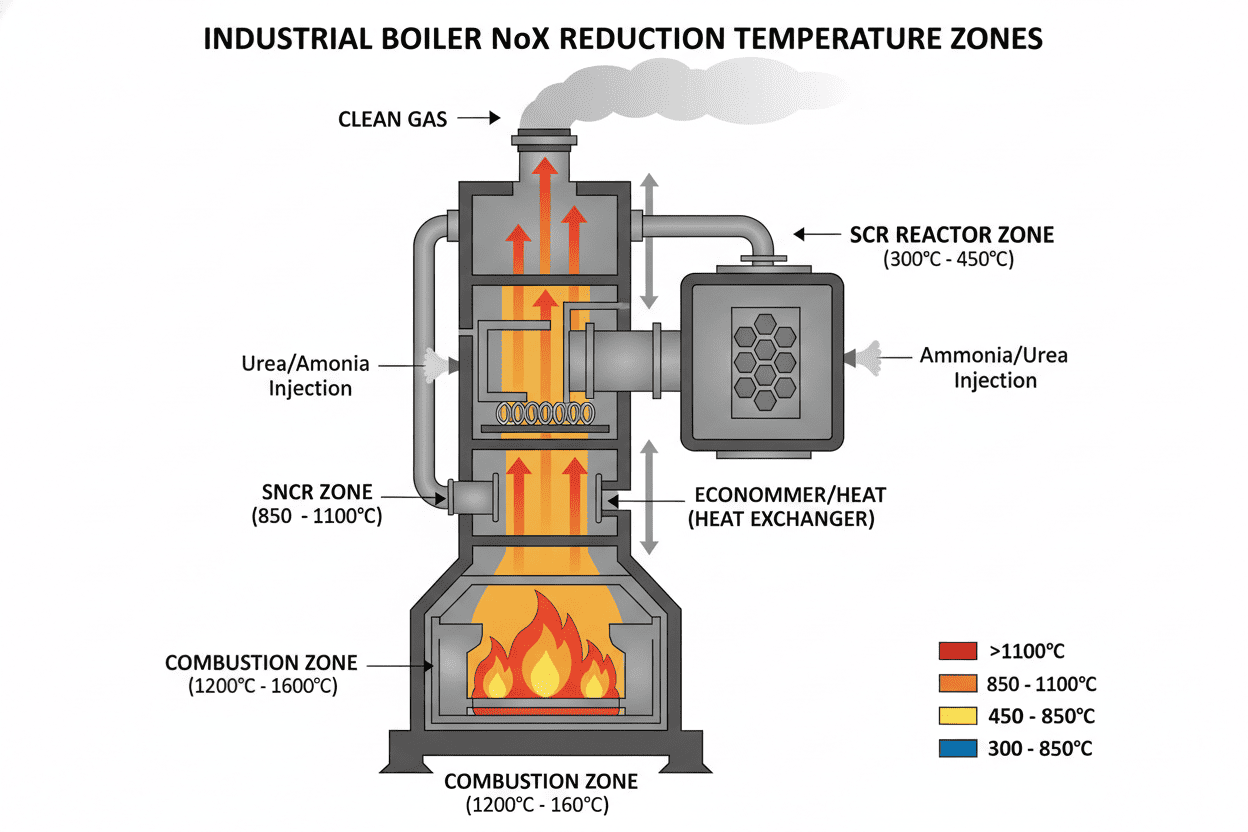
أنظمة SNCR لا تستخدم محفزا. وبسبب افتقارها لهذا الطريق الكيميائي المختصر، فهي تتطلب كمية هائلة من الطاقة الحرارية لإجبار حدوث التفاعل الكيميائي. يجب على أنظمة SNCR حقن المادة مباشرة في الغلاية أو الفرن عندما تكون درجات الحرارة متطرفة—وتحديدا ضمن "منطقة جولدي لوكس" من 1600°F إلى 2100°F.
- إذا كانت درجة الحرارة مرتفعة جدا، فإن الأمونيا تحترق فعليا وتنتج المزيد من NOx.
- إذا كانت درجة الحرارة منخفضة جدا، لا يحدث التفاعل، مما يؤدي إلى ظاهرة خطيرة ومهدرة تعرف باسم "انزلاق الأمونيا".
! مخطط يوضح مناطق درجة الحرارة لأنظمة SCR وSNCR في غلاية صناعية
جدول مقارنة المفاهيم الأساسية
| ميزة | SCR (الاختزال التحفيزي الانتقائي) | SNCR (الاختزال الانتقائي غير التحفيزي) |
|---|---|---|
| الآلية الأساسية | يستخدم محفزا معدنيا لدفع التفاعل. | يستخدم حرارة الفرن الشديدة لدفع التفاعل. |
| درجة حرارة التشغيل | الحد الأدنى: 500°F - 800°F (260°C - 427°C) | أعلى درجة حرارة: 1600°F - 2100°F (870°C - 1150°C) |
| كفاءة تقليل NOx | الأعلى: من 70٪ إلى 95٪+ (تم التحقق من وكالة حماية البيئة) | متوسط: من 30٪ إلى 70٪ (معتمد من وكالة حماية البيئة) |
| متطلبات المساحة | يتطلب مساحة كبيرة لتوفير مساكن محفزة. | بصمة ضئيلة؛ الحقن المباشر في الغلاية. |
| تعقيد النظام | مرتفع (يتطلب منفخات سخام، إدارة المحفزات). | منخفض (بشكل رئيسي المضخات، الأنابيب، والفوهات). |
3. دليل خطوة بخطوة للاختيار بين SCR و SNCR
اختيار النظام المناسب يتطلب تدقيقا دقيقا للانبعاثات الأساسية للمنشأة، والأهداف التنظيمية المحلية، والقيود الميزانية. إليك إطار عملي لتوجيه عملية اتخاذ القرار الخاصة بك.
3.1 السيناريو أ: لوائح صارمة وتقليل عالي في أكاسيد النيتروجين (مسار SCR)
إذا كانت منشأتك تقع في منطقة منظمة بشدة (مثل كاليفورنيا، مناطق الاتحاد الأوروبي الصارمة) وأنت مطالب بخفض انبعاثات NOx بنسبة 80٪ أو أكثر، فإن SCR هو خيارك الوحيد. بينما يكون الإنفاق الرأسمالي الأولي (CapEx) مرهقا—وغالبا ما يصل إلى ملايين الدولارات بسبب تكلفة أسرة المحفز والتعديلات الهيكلية—فإن الإنفاق التشغيلي (OpEx) فعال للغاية. نظرا لأن المحفز يضمن تفاعل معظم الأمونيا المحقونة مع NOx، فإن النفايات الكيميائية تقلل من الأقل.
الأفضل ل: محطات توليد الطاقة الكبيرة، ومنشآت التصنيع الثقيلة، والمصانع ذات العمليات المستقرة والمستمرة.
3.2 السيناريو ب: تعديلات واعية بالميزانية وأهداف معتدلة (مسار SNCR)
إذا كان هدفك التنظيمي يتطلب فقط تخفيضا بنسبة 40٪ إلى 50٪ في NOx، فإن تركيب نظام SCR سيكون مبالغة مالية كبيرة. SNCR هو الخيار المثالي هنا. رأس المال المالي ل SNCR هو جزء بسيط من SCR لأنه لا يوجد محفز للشراء ولا هيكل سكني ضخم لبناءه. كل ما عليك هو تركيب رماح الحقن مباشرة في الفرن العلوي. ومع ذلك، يجب على مديري المحطات أن يكون مدركا أن SNCR لديه استثمار تشغيلي أعلى مع مرور الوقت. نظرا لأن التفاعل أقل كفاءة بدون محفز، يجب حقن كمية أكبر بكثير من المواد الكيميائية لتحقيق التقليل المطلوب، مما يؤدي إلى ارتفاع التكاليف الكيميائية المستمرة.
الأفضل ل: أفران الأسمنت، ومحارق النفايات الصلبة البلدية، والغلايات الصناعية الصغيرة التي تواجه تحديثات تنظيمية معتدلة.
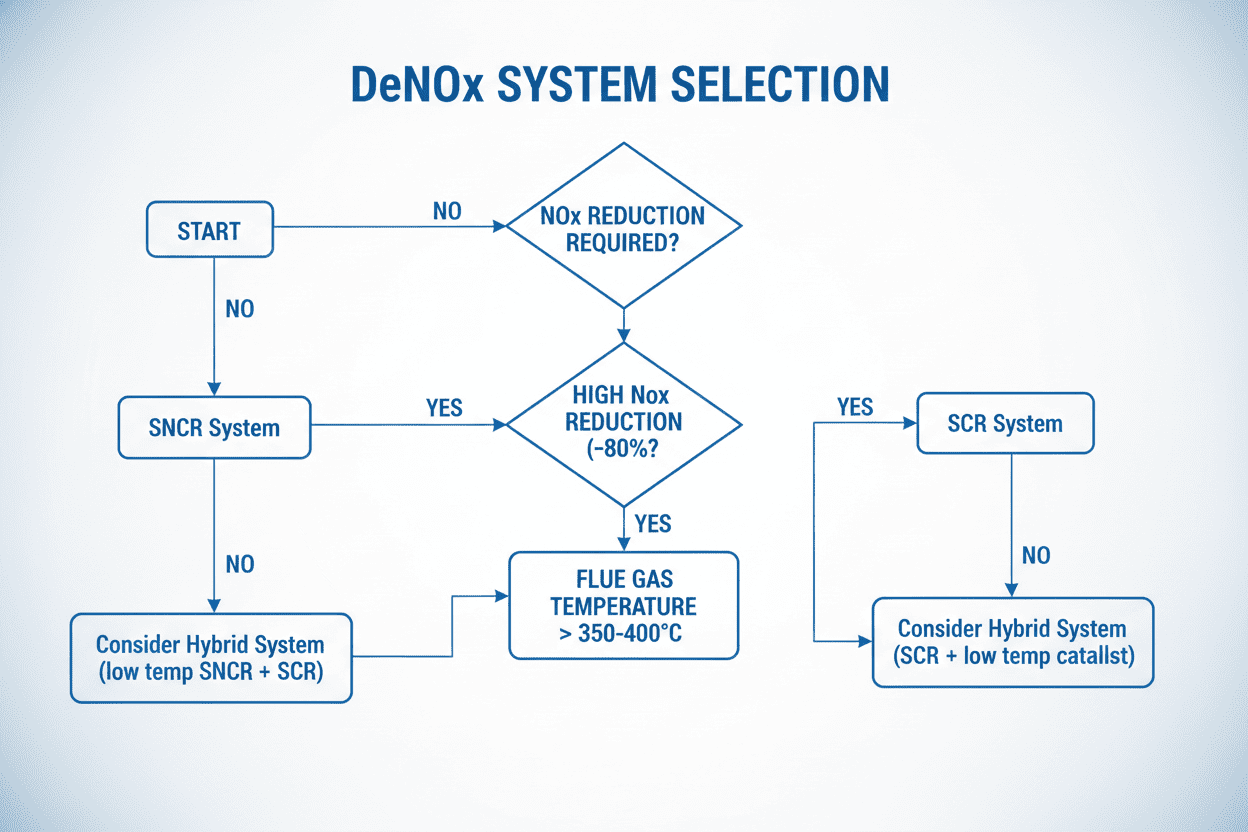
3.3 النهج الهجين (SNCR/SCR)
بالنسبة للمنشآت التي تحتاج إلى كفاءة عالية لكنها تفتقر إلى المساحة الفيزيائية لحوض محفز SCR ضخم بالحجم الكامل، أصبح النظام الهجين أكثر شعبية. يتضمن ذلك تركيب نظام SNCR في الفرن لخفض الجزء الأكبر من NOx (مثلا 40٪)، يليه محفز SCR صغير داخل القناة في الأسفل ل"تلميع" العادم المتبقي والتقاط أي أمونيا غير متفاعلة.
! مخطط انسيابي يوضح عملية اتخاذ القرار بين أنظمة SCR وSNCR والأنظمة الهجينة
جدول المواصفات والبيانات المالية لاختيار النظام
| نوع النظام | رأس المال (الاستثمار الأولي) | العمليات العملية (التكاليف الجارية) | استهلاك المواد الكيميائية | تركيز الصيانة |
|---|---|---|---|---|
| SCR | $$$$ (مرتفع جدا) | $$ (متوسط) | عالي الكفاءة (منخفض النفايات) | تنظيف واستبدال المحفز، طاقة مروحة السحب (PULL). |
| SNCR | $ (منخفض) | $$$ (عالي) | أقل كفاءة (حجم عالي) | تآكل الفوهة، تآكل أنابيب الغلاية، إمداد المواد الكيميائية. |
| هجين | $$$ (متوسط/عالي) | $$ (متوسط) | محسن | صيانة متوازنة لكلا النظامين. |
4. نصائح خبراء والمخاطر الشائعة التي يجب تجنبها
حتى أغلى أنظمة التحكم في الانبعاثات الهندسة بشكل مثالي ستفشل إذا كان التنفيذ التشغيلي ضعيفا. استنادا إلى عقود من الخبرة في الهندسة الصناعية والمواضيع الشائعة لحل المشكلات في منتديات إدارة المصانع، إليك المخاطر المهمة التي يجب تجنبها.
🛑 المأزق 1: تجاهل الدور الحاسم لفوهات الحقن
هذا هو الخطأ الأكثر شيوعا والأكثر تكلفة الذي يرتكبه مهندسو المحطة. أفضل نظام SNCR أو SCR في العالم سيفشل تماما إذا انسدت فوهات الرش أو تحللت أو وزعت المادة بشكل غير متساو.
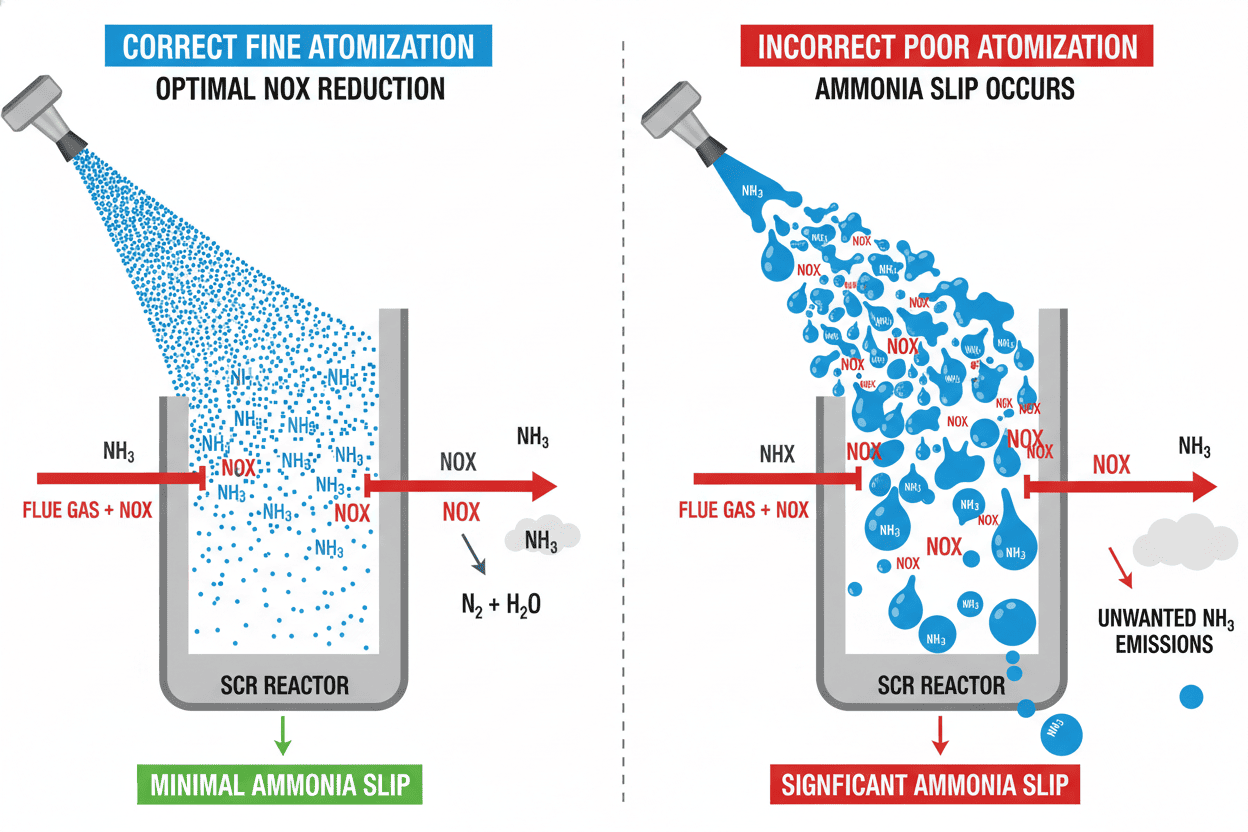
في كلا النظامين، يجب أن تتطور الأمونيا أو اليوريا إلى قطرات دقيقة للغاية.
- إذا كانت القطرات كبيرة جدا، فلن تتبخر وتتفاعل في الوقت المناسب. ستتصادم مع أنابيب الغلاية، مما يسبب تآكلا شديدا وفترات توقف غير متوقعة.
- إذا كان نمط الرش غير متساوية*، ستخرج جيوب أكاسيد النيتروجين دون علاج، مما يؤدي إلى فشلك في اختبارات الامتثال.
لحماية استثمارك، يجب عليك استخدام فوهات إزالة الذرات عالية الكفاءة من SCR وSNCR المصممة خصيصا للتحكم في الانبعاثات. تضمن هذه الفوهات المصممة بدقة حجم القطرات الأمثل وتوزيع منتظم، مما يعظم التفاعل الكيميائي ويحمي بنية الغلاية التحتية من الاصطدام السائل.
🛑 Pitfall 2: السماح ب "انزلاق الأمونيا"
انزلاق الأمونيا يحدث عندما يفشل الكواشف المحقون (الأمونيا أو اليوريا) في التفاعل مع NOx ويهرب ببساطة من المدخنة إلى الغلاف الجوي. لماذا هذا كابوس لمديري المصانع؟
- المال المهدر: أنت حرفيا ترش مواد كيميائية باهظة الثمن في السماء دون أي فائدة.
- تلوث جديد: الأمونيا ملوثة بحد ذاتها. قد يؤدي انبعاثها إلى فرض غرامات ثانوية من الجهات البيئية.
- تلف المعدات: يمكن للأمونيا غير المتفاعلة أن تتفاعل مع الكبريت في العادم لتكوين ثنائي كبريتات الأمونيوم، وهو مادة لزجة شديدة التآكل تدمر المعدات التالية مثل سخانات الهواء المسبقة.
يتطلب منع انزلاق الأمونيا تحكما صارما في درجة الحرارة (خاصة في SNCR)، وكما ذكر أعلاه، التذرية المثالية من خلال فوهات حقن عالية الجودة.
! مخطط مقارنة يوضح التذرية الدقيقة الصحيحة مقابل التوزيع الدقيق
🛑 المأزق 3: معالجة أكاسيد النيكاد النيتروجين بعزلة
نادرا ما يكون NOx هو الملوث الوحيد في غاز العادم. إذا كانت منشأتك تحرق وقودا غنيا بالكبريت (مثل بعض درجات الفحم)، يجب عليك أيضا التعامل مع ثاني أكسيد الكبريت (SO2). عند تصميم ترقية SCR أو SNCR، يجب على المهندسين مراعاة كيفية تفاعل النظام مع أنظمة التحكم في الانبعاثات الأخرى، مثل أنظمة إزالة الكبريت من غازات المداخن (FGD)(https://www.nozzle-intellect.com/blogDetail/what-is-flue-gas-desulfurization-fgd-a-complete-guide/7.html). الفشل في دمج هذه الأنظمة بشكل شامل قد يؤدي إلى تلوث كيميائي متبادل وفشل كارثي في المعدات.
5. الخاتمة والأفكار النهائية
الاختيار بين نظام SCR ونظام SNCR هو من أكثر الخيارات تأثيرا ماليا التي يتخذها مدير المصنع.
لتلخيص الأمر: إذا كانت بيئتك التنظيمية تتطلب الحد الأقصى لخفض أكاسيد النيتروجين (70-95٪+) ولديك ميزانية رأس المال لدعمها، فإن SCR هو الخيار النهائي. يعمل في درجات حرارة منخفضة ويوفر كفاءة ممتازة في المواد الكيميائية طويلة الأمد. ومع ذلك، إذا كنت تبحث عن تحديث فعال من حيث التكلفة لتحقيق امتثال متوسط (30-70٪)، فإن SNCR هو الحل العملي منخفض النفقات الرأسمالية، بشرط أن تتمكن من إدارة متطلبات الحقن بدرجات الحرارة العالية المحددة.
بغض النظر عن المسار الذي تختاره، تذكر أن نجاح نظام إزالة الطلاء يعتمد كليا على جودة توصيل الكواشف الخاصة بك. الاستثمار في تقنية التذمر في الأقساط هو أرخص بوليصة تأمين يمكنك شراؤها ضد انزلاق الأمونيا، والمواد الكيميائية المهدرة، والغرامات التنظيمية.
قائمة ملخص سريعة
| عامل القرار | اختر SCR إذا... | اختر SNCR إذا... |
|---|---|---|
| هدف الامتثال | تحتاج إلى تقليل بنسبة >70٪ من NOx. | تحتاج إلى تقليل بنسبة 70٪ من NOx <. |
| ملف الميزانية | متوفر رأس المال العالي؛ الرغبة في تقليل عمليات التشغيل. | ميزانية رأس المال الضيق؛ يمكنه امتصاص نقاط التشغيل الأعلى. |
| قيود المساحة | لديك مساحة لبناء سكن محفز. | المساحة محدودة؛ أحتاج إلى حقن مباشر للغلاية. |
| درجات حرارة العادم | الغاز أبرد (500°F - 800°F). | الفرن شديد الحرارة (1600°F - 2100°F). |
الخطوات التالية: هل تقوم حاليا بتقييم ترقية للتحكم في الانبعاثات أم تعاني من ارتفاع انزلاق الأمونيا في إعدادك الحالي؟ المشكلة على الأرجح تكمن في نقطة الحقن. قيم أداء الفوهة الحالي الخاص بك واستشر متخصصين هندسيين لضمان تحسين توصيل الكواشف لدرجات حرارة التشغيل الخاصة بك.