



كيفية إتقان رش الشتلات في الزجاج الزجاجي: الرذاذ الجاف، وفوهات النفاذية الخالية من الانسداد
إذا كنت مزارعا تجاريا للبيوت المحمية أو هاويا متقدما للزراعة المائية، فأنت تعرف بالفعل الحزن عند فقدان صينية كاملة من الشتلات الرقيقة بسبب البوتريتيس (العفن الرمادي) أو التخميد. تنفق آلاف الدولارات على ضبط الإضاءة والمغذيات، فقط لتخونه نظام الرش الخاص بك. تتقطر الفوهات، وقطرات الماء الكبيرة تسحق السيقان الهشة فعليا، والماء العسر يسد نظامك في الوقت الذي تحتاج فيه نباتاتك للرطوبة أكثر.
سر بيئة الشتلات المثالية ليس فقط "المزيد من الماء"—بل هو التحكم الدقيق في الرطوبة. في هذا الدليل الشامل، سنشرح العلم الدقيق لرش الزجاج الدفيء. ستتعلم كيف تتعامل مع عجز ضغط البخار (VPD)، وتختار حجم القطرة المناسب (ميكرون)، وتقضي تماما على تسرب الفوهة، وأخيرا تحل مشكلة انسداد المياه العسرة التي تعاني منها العديد من المزارعين.
! تكاثر شتلات البيت الزجاجي التجاري مع نظام رش جاف فائق الدقة قيد التشغيل
- 1. 1. فهم رذاذ الشتلات في الزجاج الزجاجي: الأساسيات
- 2. 2. المفاهيم الأساسية مبسطة: VPD، ميكرون، و"الضباب الجاف"
- 2.1. عجز ضغط البخار (VPD): "قوة التجفيف" للهواء
- 2.2. ميكرون: تشريح قطرة الماء
- 2.3. سحر "الضباب الجاف"
- 2.4. جدول المقارنة: الفوهات التقليدية مقابل فوهات الرذاذ الجاف
- 3. 3. دليل خطوة بخطوة: اختيار وصيانة نظام الرذاذ الخاص بك
- 3.1. 3.1 قياس الفوهة المناسبة (المواصفات والبيانات)
- 3.2. 3.2 الميزات غير القابلة للنقاش: خصائص مكافحة التنقيط
- 3.3. 3.3 حل كابوس انسداد المياه العسرة
- 4. 4. نصائح خبراء والمخاطر الشائعة التي يجب تجنبها
- 4.1. النقطة الأولى: وضع الفوهات بالقرب جدا من المظلة
- 4.2. المأزق 2: الاعتماد فقط على المؤقتات بدلا من الحساسات
- 4.3. الترقية إلى حلول صناعية
- 5. 5. الخاتمة والأفكار النهائية
- 6. 6. الأسئلة الشائعة
1. فهم رذاذ الشتلات في الزجاج الزجاجي: الأساسيات
بالنسبة للزراعة التجارية، تعد مرحلة الشتلات والتكاثر هي أهم عنق زجاجة في دورة الإنتاج لديك. القصاصات والبذور الجديدة تفتقر إلى نظام جذور متطور. وبما أنها لا تستطيع سحب الماء من التربة بكفاءة، فهي تعتمد كليا على أوراقها لامتصاص الرطوبة والبقاء.
إذا كان الهواء في بيت زجاجك جافا جدا، فإن الشتلات ستتعرق الرطوبة أسرع مما يمكنها استبدالها، مما يؤدي إلى ذبول قاتل. إذا كان الهواء رطبا جدا، أو إذا كان الماء سائلا على الأوراق، فإنك تخلق بيئة تكاثر لممرضات الفطريات مثل Botrytis cinerea وPythium.
هنا يفشل الري التقليدي ويصبح الرذاذ عالي الضغط ضروريا. نظام الرش المصمم بشكل صحيح لا "يسقي" النباتات؛ إنه يعيد تكييف الهواء. من خلال حقن قطرات ماء مجهرية في البيئة، يمكنك خفض درجة الحرارة المحيطة ورفع الرطوبة في الوقت نفسه، مما يخلق مناخا دقيقا يسمح للنباتات الرقيقة بتركيز طاقتها على تطور الجذور السريع بدلا من البقاء.
ومع ذلك، فإن هامش الخطأ ضئيل جدا. استخدام الفوهات الخاطئة، أو تشغيل ضغط غير مناسب، أو تجاهل ترشيح المياه سيؤدي إلى تدمير محصولك بشكل نشط. لتحقيق معدلات بقاء عالية وتحقيق أقصى عائد استثماري، يجب عليك الانتقال من الرش التقليدي إلى التحكم الدقيق في الغلاف الجوي.
2. المفاهيم الأساسية مبسطة: VPD، ميكرون، و"الضباب الجاف"
لاتخاذ قرارات شراء ذكية لبنية تحتك البيئية، يجب أن تفهم فيزياء المياه والهواء. دعونا نتخلص من المصطلحات الهندسية المعقدة وننظر إلى المقاييس الثلاثة الأساسية التي تحدد صحة النبات.
عجز ضغط البخار (VPD): "قوة التجفيف" للهواء
VPD هو مقياس لكمية الرطوبة التي يمكن للهواء الاحتفاظ بها عند درجة حرارة معينة قبل أن يصل إلى التشبع (رطوبة 100٪).
- ارتفاع VPD: الهواء جاف جدا وعطشان. سيمتص الماء بقوة من أوراق شتلاتك.
- انخفاض VPD: الهواء شبه مشبع. يسحب القليل جدا من الماء من النباتات.
بالنسبة للشتلات والقصاصات غير المجذرة، تحتاج إلى VPD منخفض (عادة بين 0.4 إلى 0.8 كيلو باسكال). وبما أنها بلا جذور، يجب تقليل "قوة تجفيف" الهواء حتى لا تجف. الرذاذ الدقيق هو الطريقة الأكثر كفاءة لخفض VPD فورا.
ميكرون: تشريح قطرة الماء
الميكرون (ميكرومتر) يساوي جزء من ألف من المليمتر. لوضع هذا في نصابه، فإن سماكة شعرة الإنسان حوالي 70 إلى 100 ميكرون. عندما يتعلق الأمر بفوهات البيت الزجاجي، الحجم هو كل شيء.
- قطرات المطر: 1,000+ ميكرون.
- الرشاشات القياسية: 300 - 500 ميكرون.
- الميكروفون منخفض الضغط: 50 - 100 ميكرون (ستسقط في النهاية وأسطح مبللة).
- ضباب/ضباب عالي الضغط: 5 - 15 ميكرون.
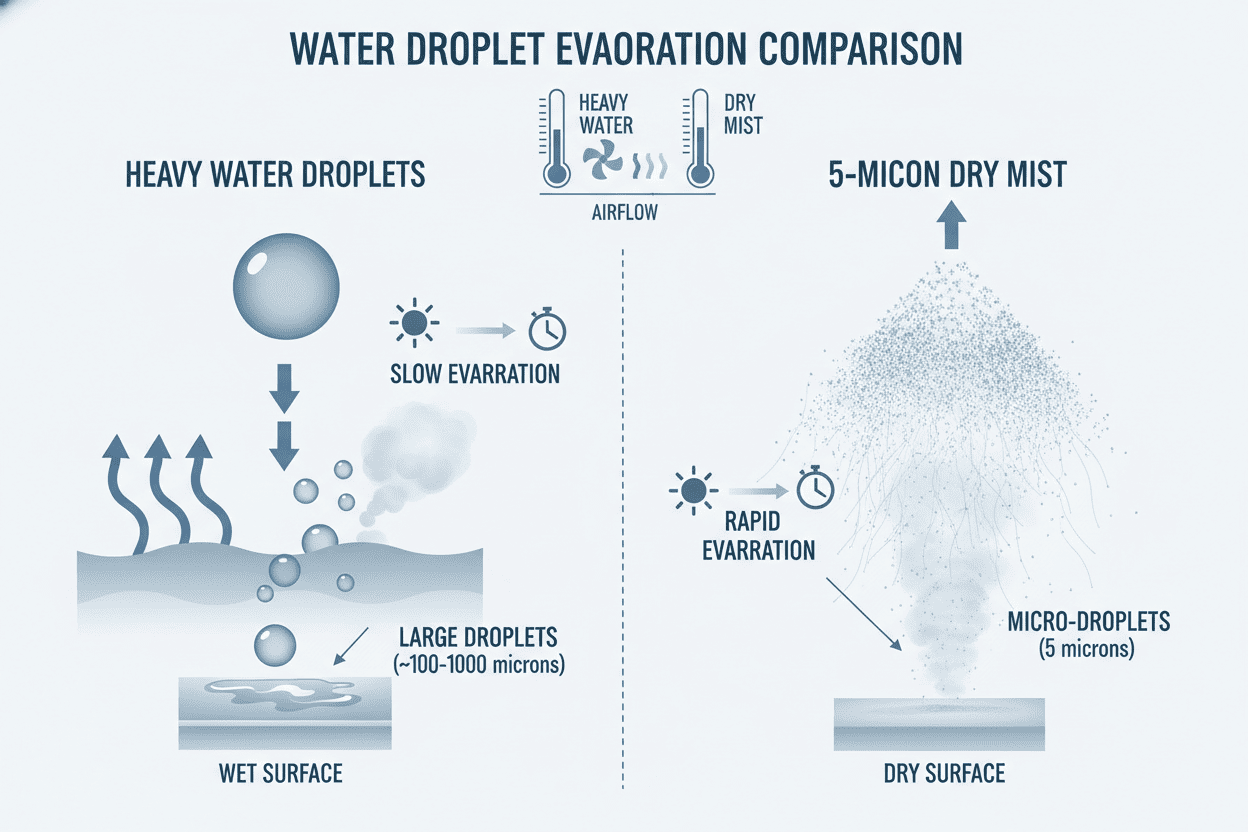
بالنسبة للشتلات الهشة، 5 إلى 15 ميكرون هي النقطة المثالية تماما. قطرات بهذا الحجم تفتقر إلى الكتلة التي تسقط بسرعة. بدلا من ذلك، تبقى معلقة في تيارات الهواء وتخضع ل "تبخر وميض".
سحر "الضباب الجاف"
يقودنا هذا التبخر السريع إلى المفهوم الأكثر أهمية في الانتشار الحديث: تقنية الضباب الجاف. الضباب الجاف يشير إلى عملية تذمر حيث تكون القطرات مجهرية جدا لدرجة أنها تتبخر تماما في الهواء قبل أن تلمس سطحا أو ورقة نبات.
لماذا هذا يغير قواعد اللعبة؟ لأنه يسمح لك بتبريد الدفيئة ورفع الرطوبة إلى 90٪+ دون ترك ماء راكد على الأوراق. الأوراق الجافة تعني أن الأبواغ الفطرية لا تستطيع الإنبات. تحصل على جميع فوائد الرطوبة العالية دون أي خطر للعفن.
جدول المقارنة: الفوهات التقليدية مقابل فوهات الرذاذ الجاف
| ميزة | رشاشات تقليدية / صغار الضغط المنخفض | فوهات الضغط العالي "الضباب الجاف" | تأثير الشتلات |
|---|---|---|---|
| حجم قطرة | 100 - 500 ميكرون | 5 - 15 ميكرون | طفو الضباب الجاف؛ الضباب العادي يسحق النباتات الصغيرة. |
| رطوبة الأوراق | هاي (الأوراق تبلل) | من الصفر إلى الحد الأدنى (يتبخر في الهواء) | الرذاذ الجاف يمنع البوتريتيس وتخميد الجسم. |
| كفاءة التبريد | فقير (برك مياه على الأرض) | ممتاز (التبخر المفاجئ يمتص الحرارة) | الضباب الجاف يقلل من الإجهاد الحراري دون أن يغرق التربة. |
| ضغط التشغيل | 30 - 60 PSI (2 - 4 بار) | 800 - 1000+ PSI (55 - 70 بار) | يتطلب الضغط العالي تحطيم الماء إلى ضباب. |
| استهلاك الطاقة | منخفض | متوسط (يتطلب مضخة ضغط عالي) | تكلفة مقدمة أعلى، لكن عائد استثمار ضخم في بقاء المحاصيل. |
! مخطط يوضح الفرق بين قطرات الماء الثقيلة وضباب جاف 5 ميكرون يتبخر
3. دليل خطوة بخطوة: اختيار وصيانة نظام الرذاذ الخاص بك
ترقية الدفيئة إلى نظام رش دقيق يتطلب تخطيطا دقيقا. خطأ شائع يرتكبه المزارعون هو شراء فوهات رخيصة من أمازون، وربطها بخرطوم حديقة عادي، والتساؤل عن سبب تحول بيت زجاجهم إلى مستنقع. إليك النهج العملي وخطوة بخطوة للقيام بذلك بشكل صحيح.
3.1 قياس الفوهة المناسبة (المواصفات والبيانات)
ليست كل الفوهات متساوية الصنع. الفتحة (الثقب الصغير الذي يمر منه الماء) تحدد حجم القطرة، ولكن فقط إذا وفرت الضغط المناسب للماء. لتحقيق ضباب جاف حقيقي، تحتاج إلى مضخة ضغط عالي (عادة 800 إلى 1000 PSI) مقترنة بحجم فتحة الفوهة الصحيح.
المواصفات وجدول البيانات: اختيار فتحة الفوهة الخاصة بك
| حجم فتحة الفوهة (مم) | حجم فتحة الفوهة (بوصة) | متوسط حجم القطرة عند 1000 رطل لكل بوصة مربعة | معدل التدفق (لتر/دقيقة) | أفضل تطبيق في الزراعة |
|---|---|---|---|---|
| 0.10 مم | 0.004" | 5 - 10 ميكرون | 0.02 - 0.03 لتر/دقيقة | مثالي للشتلات/التكاثر. أقصى تبخر وميض. أقل خطر للتربل. |
| 0.15 مم | 0.006" | 10 - 15 ميكرون | 0.04 - 0.05 لتر/دقيقة | ممتاز للتحكم العام في رطوبة البيوت المحمية وتبريدها. |
| 0.20 مم | 0.008" | 15 - 20 ميكرون | 0.06 - 0.08 لتر/دقيقة | جيد للنباتات الناضجة، أو المناطق الاستوائية، أو تبريد الفناء الخارجي. |
| 0.30 مم+ | 0.012"+ | 25+ ميكرون | 0.10+ لتر/دقيقة | تجنب البيوت الزجاجية الداخلية. سيسبب رطبا غزيرا وتجمعا. |
نصيحة قابلة للتنفيذ: بالنسبة لطاولات الانتشار، دائما ما يكون افتراضيا على فتحات 0.10مم أو 0.15mm. تتطلب ترشيح أكثر صرامة، لكن السلامة البيولوجية التي توفرها لشتلاتك لا تضاهى.
3.2 الميزات غير القابلة للنقاش: خصائص مكافحة التنقيط
إذا تصفحت منتديات ريديت مثل r/Greenhouses أو r/macrogrowery، سترى شكوى واحدة تتكرر باستمرار: *"نظام الرش لدي ينطفئ، لكن الفوهات تستمر في تقطر الماء لمدة 5 دقائق." *
هذا يسمى بعد التنقيط، وهو قاتل صامت. عندما تتوقف مضخة الضغط العالي، يفقد الماء المتبقي في الخطوط العلوية الضغط. بدلا من أن يتلاشى إلى ضباب ناعم، يتجمع هذا الماء المتبقي في قطرات ضخمة وثقيلة. عندما تسقط قطرة بوزن 2000 ميكرون من ارتفاع 6 أقدام على شتلة عمرها 3 أيام، يكون الأمر مثل كرة بولينج تصطدم بإنسان. يمكن أن يكسر الساق، أو يغسل وسط النمو، أو يترك بركة موضعة تتعفن منطقة الجذور.
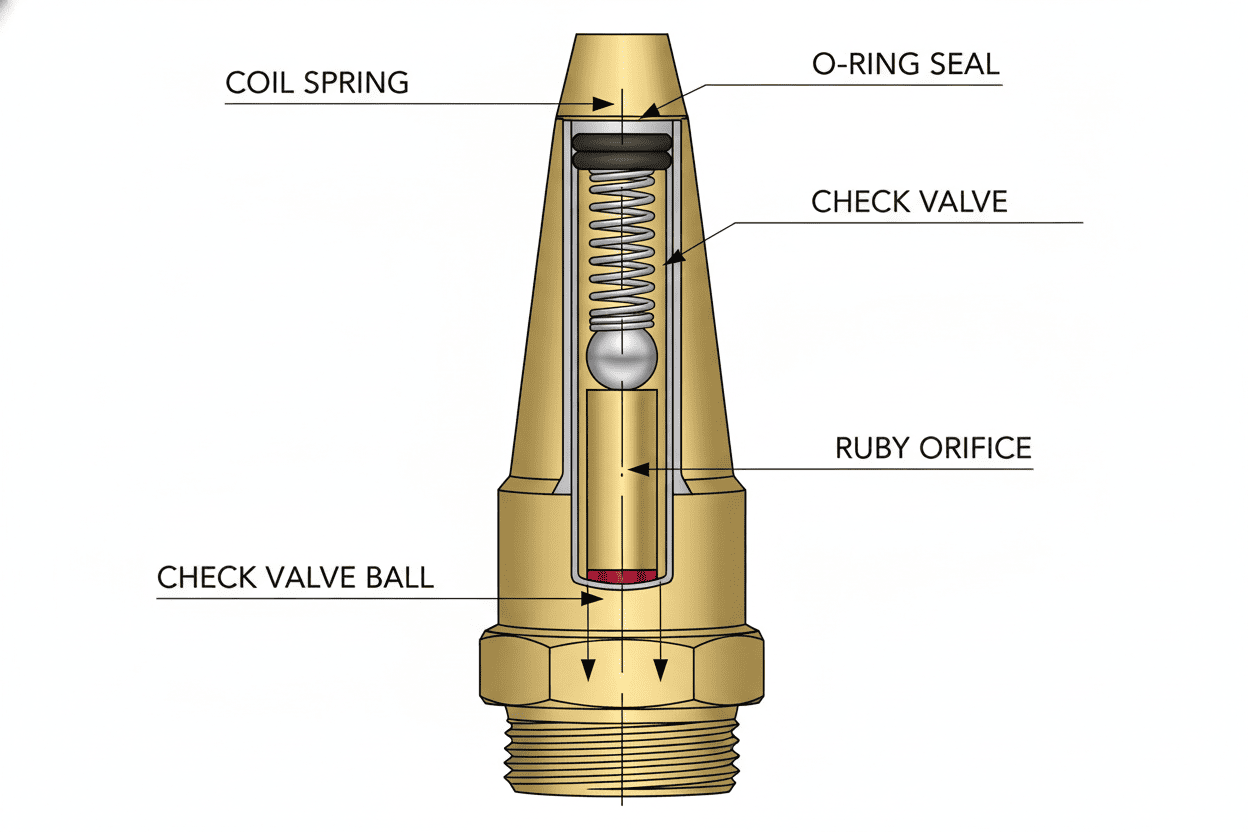
الحل: صمامات فحص مضادة للتسقط عند شراء الفوهات، يجب التأكد من احتوائها على صمام فحص داخلي مضاد للتسرب (anti slup).
كيف يعمل: داخل جسم الفوهة يوجد مكبس صغير مزود بنابض (غالبا ما يكون مصنوعا من الفولاذ المقاوم للصدأ أو مطاط Viton). عندما تعمل المضخة عند 1000 رطل لكل بوصة مربعة، يدفع ضغط الماء النابض للفتح. في اللحظة التي تتوقف فيها المضخة وينخفض الضغط إلى ما دون حد معين (عادة حوالي 150-300 PSI)، يغلق النابض بعنف. هذا يغلق الفتحة فورا من الداخل، مما يحبس الماء في الخط ويمنع حتى قطرة واحدة من السقوط على محصولك.
! مقطع عرضي لفوهة مقاومة التسرب تظهر النابض الداخلي وآلية صمام التحقق
3.3 حل كابوس انسداد المياه العسرة
ثاني أكثر نقطة فشل شيوعا هي الانسداد. فتحة 0.10 مم صغيرة جدا—أصغر بكثير من حبة رمل. إذا كان مصدر المياه لديك يحتوي على نسبة معدنية عالية (الكالسيوم والمغنيسيوم، الشائع في مياه الآبار) أو جزيئات معلقة، فإن الفوهات ستسد خلال أيام.
انسداد الفوهة يعني توزيع الرطوبة غير المتساو. بعض الصواني تجف وتموت، بينما البعض الآخر يتعرض للري الزائد. إليك كيفية تأمين نظامك ضد الانسدادات:
- الترشيح متعدد المراحل (خط الدفاع الأول) لا تقم أبدا بتمرير مياه الصنبور أو الآبار الخام مباشرة إلى مضخة ضخ عالية الضغط. تحتاج إلى نظام ترشيح متدرج:
- المرحلة 1: مرشح مطوي بحجم 50 ميكرون لالتقاط الرواسب الكبيرة والرمل والصدأ.
- المرحلة 2: فلتر بولي بروبيلين يدور بقطر 5 ميكرون لالتقاط الطمي الناعم.
- المرحلة 3 (اختيارية ولكن موصى بها): فلتر بحجم 1 ميكرون مباشرة قبل مدخل المضخة لحماية المكابس السيراميكية للمضخة والفوهات فائقة الدقة.
-
معالجة المياه (التناضح العكسي) إذا كانت عروسة الماء لديك فوق 100 جزء في المليون (أجزاء في المليون)، فلن تمنع الفلاتر القياسية تراكم ترسام الكالسيوم على طرف الفوهة أثناء تبخر الماء. بالنسبة للأنظمة التجارية، ينصح بشدة بتشغيل نظام الرش على نظام مياه التناضح العكسي (RO). يقوم RO بتجريد الماء من جميع المعادن، مما يضمن أن الفوهات يمكن أن تعمل لسنوات دون تكلس.
-
اختيار المواد: الفولاذ المقاوم للصدأ والسيراميك تجنب الفوهات البلاستيكية الرخيصة أو النحاسية منخفضة الجودة ذات الإدخالات البلاستيكية. تتدهور بسرعة تحت ضغط عالي ومن المستحيل تنظيفها. استثمر في فوهات ذات هياكل من الفولاذ المقاوم للصدأ وفتحات سيراميكية. السيراميك صلب للغاية، ويقاوم تراكم المعادن أفضل من المعدن، ويحافظ على نمط رش مثالي مع مرور الوقت.
4. نصائح خبراء والمخاطر الشائعة التي يجب تجنبها
حتى مع أفضل الأجهزة، يمكن أن تؤدي أخطاء التشغيل إلى تدمير كفاءتك. استنادا إلى الخبرة الجماعية للمهندسين الزراعيين والمزارعين التجاريين، إليك الأخطاء التي يجب عليك تجنبها.
النقطة الأولى: وضع الفوهات بالقرب جدا من المظلة
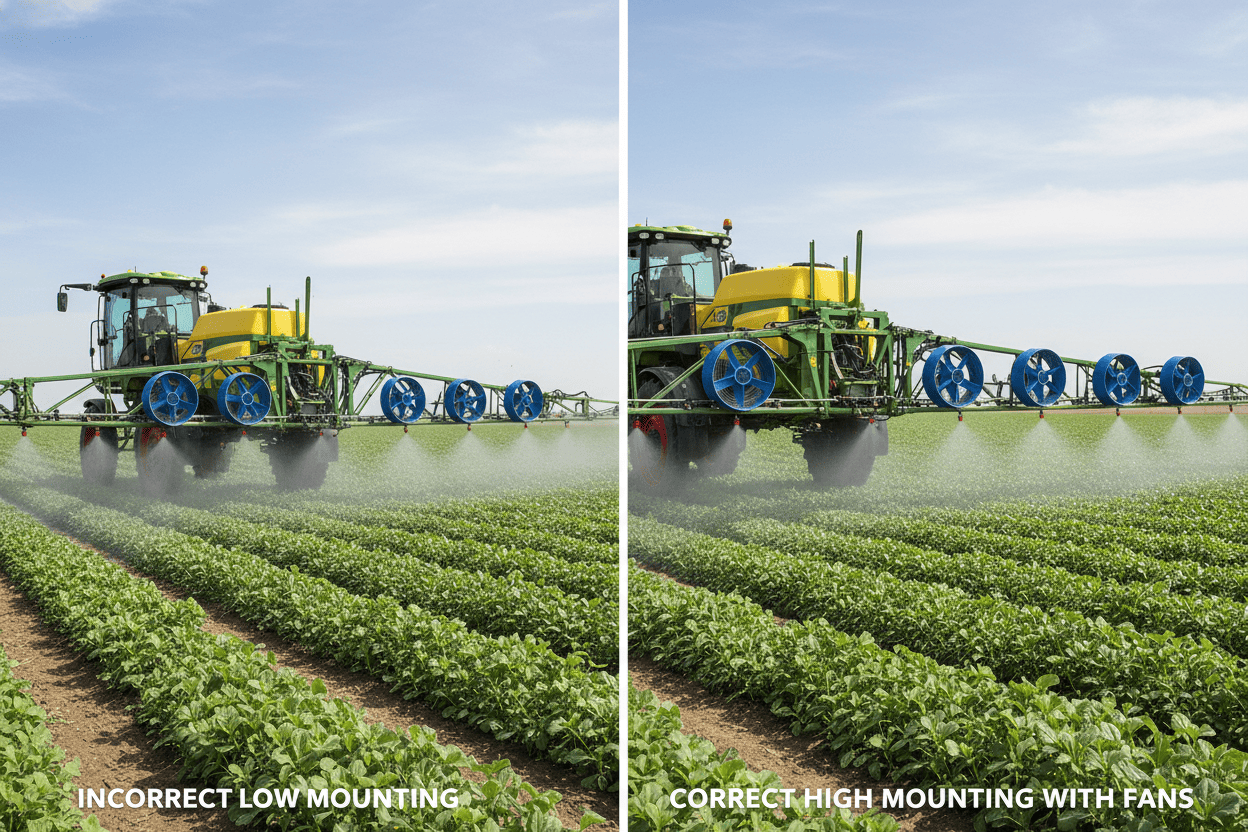
نظرا لأن الضباب عالي الضغط يخرج من الفوهة بسرعات قصوى، فإنه يحتاج إلى مسافة عمودية ليبطئ ويتوسع ويتبخر. إذا ركبت فوهات على ارتفاع قدمين فوق صواني الشتلات، سيضرب الرذاذ النباتات قبل أن يتبخر فجأة، مما يلغي تماما الغرض من نظام الرذاذ الجاف.
- نصيحة خبير: تركيب خطوط الرش على ارتفاع لا يقل عن 6 إلى 8 أقدام (1.8 إلى 2.4 متر) فوق مظلة النبات. إذا كان سقف الدفيئة منخفضا، قم بإمالة الفوهات للأعلى بزاوية 45 درجة أو وجهها إلى تدفق الهواء في مراوح الدوران لتعظيم "وقت التعليق" في الهواء.
المأزق 2: الاعتماد فقط على المؤقتات بدلا من الحساسات
تشغيل نظام رش على مؤقت بسيط (مثلا، 10 ثوان تشغيل، 5 دقائق توقف) أمر خطير. الطقس يتغير بسرعة. إعداد مؤقت يعمل بشكل مثالي عند الظهر سيغمر بيت زجاجك عند الساعة 6 مساء عندما تغرب الشمس وترتفع الرطوبة المحيطة بشكل طبيعي.
- نصيحة خبيرة: دمج نظام الرش الخاص بك مع وحدة تحكم مناخية مركزية تقيس VPD أو الرطوبة النسبية (RH). يجب أن يعمل النظام فقط عندما يرتفع VPD فوق نقطة التعيين الخاصة بك، مما يضمن عدم إشباع البيئة بشكل مفرط.
! مقارنة تظهر التركيب المنخفض غير الصحيح للفوهات مقابل التركيب العالي الصحيح مع المراوح
الترقية إلى حلول صناعية
إذا كنت تعاني حاليا من نظام DIY مدمج يتكلم باستمرار أو يتسرب أو يسدد، فمن المحتمل أن يكلفك ذلك أكثر في إنتاج المحاصيل والعمالة المفقودة مقارنة بتكلفة النظام المناسب. بالنسبة للمنشآت التجارية التي تسعى لإزالة هذه المتغيرات، فإن الانتقال إلى حلول تبريد الضباب عالية الدقة(https://www.nozzle-intellect.com/application/high-precision-industrial-humidification-mist-cooling-solutions/9.html) هو الخطوة الأكثر منطقية. الأنظمة الصناعية تقدم تحكما دقيقا في الميكرون، وصمامات مقاومة للتنقيب قوية، وترشيح مدمج، مما يؤتمت إدارة VPD الخاص بك، مما يسمح لك بالتركيز على الزراعة بدلا من السباكة.
5. الخاتمة والأفكار النهائية
يتطلب تكاثر الشتلات بنجاح توازنا دقيقا بين درجة الحرارة والرطوبة. من خلال الابتعاد عن طرق الري التقليدية وتبني تقنية الرش عالي الضغط فائق الدقة، يمكنك تقليل إجهاد النبات بشكل كبير، والقضاء على خطر الأمراض الفطرية، وتسريع نمو الجذور.
تذكر، الهدف هو تكييف الهواء، وليس ترطيب النبات. أعط الأولوية لحجم القطرات (5-15 ميكرون)، وأصر على صمامات فحص مضادة للتنقيط لحماية محصولك من الضرر الجسدي، وطبق ترشيح ماء صارم للحفاظ على نظامك خاليا من الانسدادات.
6. الأسئلة الشائعة
س1: ما هو الحجم المثالي للقطرات لتكاثر شتلات الزجاج الزجاجي؟ ج: من 5 إلى 15 ميكرون. هذا يخلق "ضبابا جافا" يتبخر بسرعة قبل ملامسة الأوراق، مما يمنع الأمراض الفطرية.
السؤال 2: لماذا تستمر فوهات الرش في التسرب بعد الإغلاق؟ ج: تحتاج إلى صمامات فحص مضادة للتسقط. تقوم هذه الصمامات المحملة بنابض بإغلاق الفتحة فورا عند انخفاض الضغط، مما يمنع التنقيط التدميري بعد التسديد.
السؤال 3: كيف أمنع انسداد الفوهات من الماء العسر؟ ج: استخدم الترشيح متعدد المراحل (حتى 1-5 ميكرون) وفكر في استخدام مياه التناضح العكسي. اختر فوهات من الفولاذ المقاوم للصدأ ذات فتحات خزفية.
س4: ما هو اضطراب الشخصية الحديدية ولماذا يهم الشتلات؟ ج: يقيس عجز ضغط البخار قوة تجفيف الهواء. حافظ على التوازن بين 0.4-0.8 كيلو باسكال للشتلات لمنع الجفاف دون التسبب في العفن.
س5: إلى أي ارتفاع يجب أن أركب فوهات الرش فوق الشتلات؟ ج: ارتكب على ارتفاع لا يقل عن 6-8 أقدام فوق المظلة. التركيب المنخفض يسبب البلل قبل التبخر؛ التركيب الأعلى يسمح بتبخر الفلاش بشكل صحيح.
ملخص سريع: أفضل ممارسات رش الزجاج في الزجاج
| المكون / المقياس | الطريقة "الخاطئة" | الطريقة "الصحيحة" (المعيار التجاري) |
|---|---|---|
| حجم قطرة | > 50 ميكرون (يبلل الأوراق، يسبب العفن) | 5 - 15 ميكرون (ضباب جاف، تبخر وميض) |
| صمام الفوهة | فتحة مفتوحة (تقطر عند الإيقاف) | صمام فحص مضاد للتسرب (إغلاق فوري) |
| جودة المياه | ماء الصنبور/البئر غير المفلتر (انسدادات فورية) | ترشيح 5 ميكرون + ماء RO (صفر انسداد) |
| نظام التحكم | مؤقتات الفترات الأساسية (يتجاهل حالة الطقس) | وحدات تحكم تعمل بمستشعر الرطوبة / VPD |
| ارتفاع التركيب | منخفض، يشير مباشرة إلى النباتات | عالي (6-8 أقدام+)، يستخدم مراوح دوران |
إذا كنت توسع عملياتك الزراعية أو الصناعية، فإن مبادئ التذرية عالية الضغط تتجاوز مجرد رطوبة البيت الزجاجي. تستخدم نفس ديناميكا الموائع وهندسة الفوهة في مجالات إدارة المرافق الحيوية الأخرى. على سبيل المثال، إذا كنت تدير نفايات زراعية واسعة النطاق، أو مرافق التسميد، أو مصانع معالجة، يمكنك استكشاف كيفية تكييف هذه التكنولوجيا لأنظمة إزالة الرائحة الذرية (https://www.nozzle-intellect.com/blogDetail/eliminating-odors-at-waste-transfer-stations-design-essentials-for-atomized-deodorizing-systems/33.html) لتحييد الروائح المحمولة جوا بكفاءة.
هل أنت مستعد لترقية بيئة التكاثر؟ توقف عن فقدان الشتلات بسبب سوء التحكم في المناخ. قيم ضغط الماء الحالي، وتحقق من الترشيح، وانتقل اليوم إلى فوهات مضادة للتسرب بدقة.